
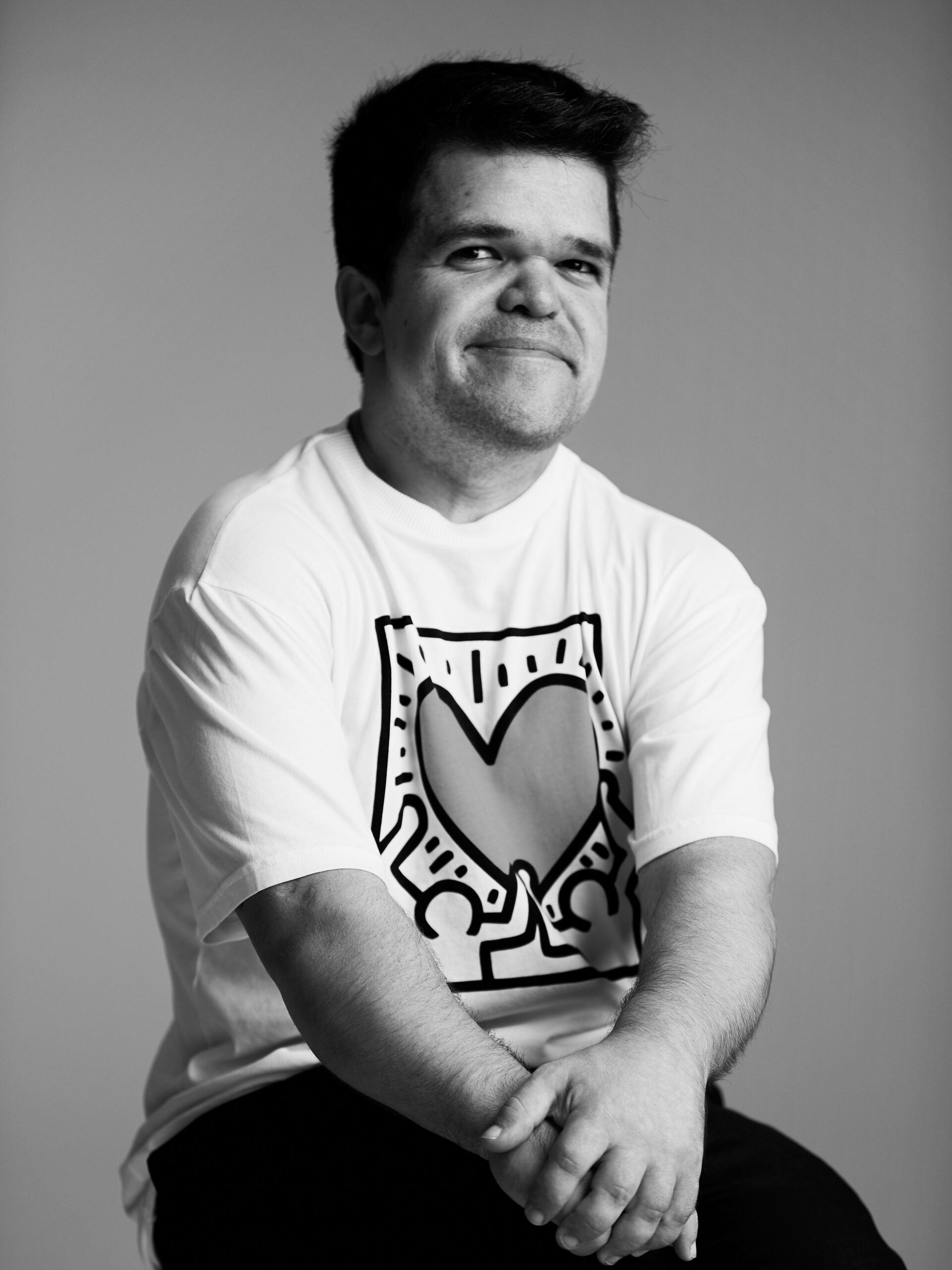
My life with Achondroplasia and the odyssey of bone lengthening
When, in the early years of school, the teachers asked the students to line up in order of height, Davide was always in the front row. At the school he attended, he never felt excluded; his classmates got along well with him, and he with them. However, he would ask his mother why he was the shortest in the class. Gradually, he became aware that, whether you like it or not, your body — which you naturally did not choose — helps shape your identity. A communicator and social inclusion activist, now serving his third term as a city councilor, Davide Meneghini was born 37 years ago in Padua, where he still lives today. He lives with achondroplasia, a rare genetic condition that is the most common form of dwarfism, affecting about one child in every 25,000 births.
To gain autonomy and improve his quality of life, Davide underwent eleven surgical procedures over five years, gaining nearly 30 centimeters in height by the age of 19. «I went from 1.27 meters to 1.55 meters, initially increasing 11 centimeters in the femurs, 15 in the tibias and fibulas, and 11 in the humerus - he says - Although my first surgery was at the age of seven or eight because of tibial varus. My legs were so bowed that it was necessary to operate to improve my posture and overall mobility.»
Like kindergarten, his elementary school years passed peacefully. Of course, Davide became increasingly aware of his appearance and sometimes had to face it. «For example, when first graders would see me, they were surprised - he recalls - They stared at me with curiosity, not understanding why I was so much shorter than the others». Overall, however, the classroom atmosphere was pleasant. «It was an open environment, and my classmates were protective of me - he continues - When a person with a difference enters a new environment, that environment becomes richer with greater sensitivity and awareness. Even today, I find it easier to build a deeper relationship with people who have come to know disability through direct or indirect experience».
It was only in middle school that Davide truly became aware of the difference in his appearance. «It was a difficult time - he says - Seeing my friends quickly grow from 1.50 to 1.80 meters made me feel different, so I focused on soccer». At that time, soccer was everything to Davide: he played passionately and well, but the preparations for his lengthening surgeries forced him to quit. While his peers started thinking about going out and first flings, he had to gather strength for the challenge ahead: enduring years of effort, pain, and sacrifice to gain those 30 centimeters in height that separated him from so-called normality. «From 2002 to 2007, it was a five-year odyssey. In a world built for people over one and a half meters tall, the lengthening surgeries would guarantee me greater autonomy».
He was operated on at the hospital in Lecco, using the method developed by Soviet surgeon Gavriil Abramovich Ilizarov, who in the 1950s in Siberia developed a leg-lengthening technique based on the application of an external circular fixator, following a bone fracture. «After the fracture, there is a recovery period during which the screws are turned daily to cause lengthening by one millimeter a day - he explains - Then you have to wait for the bones to calcify, while simultaneously doing dressings and physiotherapy. You can only start walking again at the end of each surgery, but at first, it’s very tiring. At my last surgery, I was so exhausted that I preferred to have the fixators removed without anesthesia rather than wait two weeks for hospitalization».
Today, Davide Meneghini has managed to bring his personal experience into his work as an activist and politician. In his city of Padua, he has become a point of reference for youth policies, sports, and inclusion projects such as Calcio Padova for Special and Move4free, the first free gym for people with disabilities in Italy. His recipe for change is clear: «We are behind compared to many Western countries - he concludes - We need to make people with disabilities protagonists in public life. Only then can we promote social gathering and overcome discrimination, taking a step forward as a society».