
Rassembler! Heritage on the runway with Stella Jean
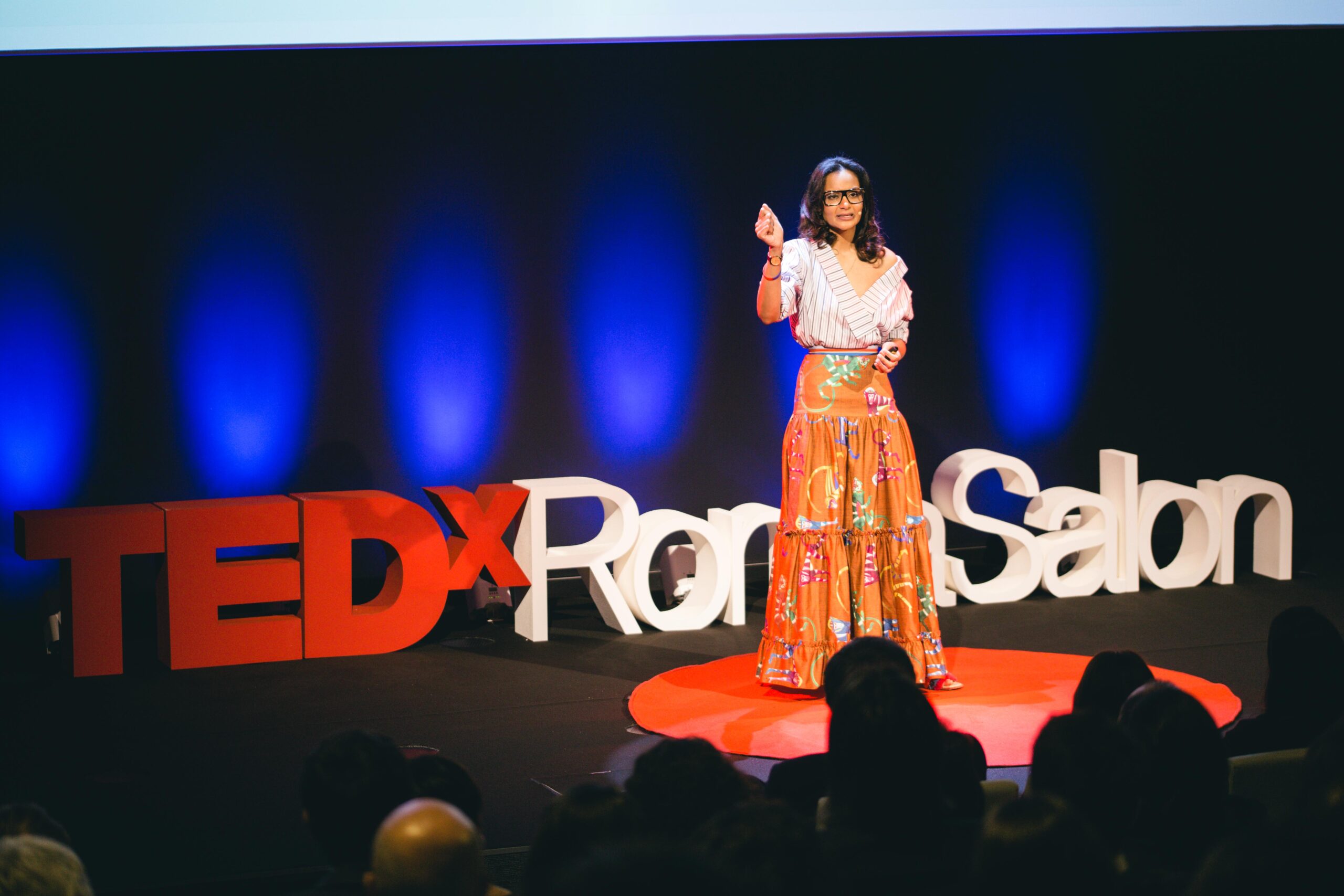
An Italian fashion designer (1979) of a Turin-born father and a Haitian mother, raised in the Roman bourgeoisie, Jean is the iconic protagonist of a fashion that has made the pride of double cultural belonging the principle of an ethical vision of elegance. To the cry of “Rassembler!” the models bring to the runway garments in bright colours and fabrics that express Jean’s Creole identity, while the sonic reference keeps alive the memory of the world’s first Black republic. It is a perceptive appeal that calls for the audience’s emotional participation and attentive gaze, not limited to the aesthetic appreciation of the garments, but instead capable of grasping the message they carry.
We are in a narrative universe that entrusts clothing with the power to tell the richness of multiculturalism and challenge prejudices about belonging. Since 2012, when she won the prestigious Roman competition Who’s On Next?, Jean has used fashion to communicate and educate about difference. This is demonstrated by the wax & stripes philosophy, the distinctive hallmark of her creations: wax fabric, a protagonist of African tailoring despite its Dutch origins, engages in dialogue with the stripes of Italian men’s shirting through artisanal craftsmanship and precious embroidery that create an effect similar to collage. This aesthetic contamination reflects Jean’s heritage, or identity heritage: neither completely Italian nor Haitian, as she states on her official page, but new and at the same time shared because, she continues, what we call different today is already part of us.
It was precisely the proud assertion of this cultural message and its great expressiveness that won over Giorgio Armani, who welcomed her into his Milanese Teatro to present her first haute couture collection in 2013, consecrating her as an ambassador of a fashion sensitive to plural identities. The theme of asserting the pride of cultural métissages characterises every collaboration by Stella Jean, including the one with Benetton (2016), a brand equally known for communication attentive to social commitment and multiculturalism, a dimension little appreciated in the Italian context, let alone represented in institutions, including those of fashion.
Thus, in 2020, compounded by the strong pressures triggered by the global Black Lives Matter movement, Jean intensified her efforts to raise awareness and mobilise against racism. She did not take part in Milan Fashion Week to protest what she, the only Black representative of the Camera Nazionale della Moda, considered insufficient support for racial diversity from this prestigious Italian industry. In the same year she launched Italians in Becoming and founded We Are Made in Italy with Edward Buchanan and Michelle F. Ngonmo, a collective intended to ensure a model of structural diversity and inclusion for BIPOC (Black Indigenous and People of Color) in fashion and to bring multiculturalism to the centre of the Italian debate by decolonising the value-based imaginary of the entire Made in Italy supply chain. Jean thus takes up the legacy of Franca Sozzani and her commitment against the underrepresentation of Black models in Italian fashion shows, the inspiration behind Vogue’s Black Issue (2008).
More recently, Jean captured the media’s attention with the L’Haïtiana collection, a tribute to Haiti’s historic qualification for the 2026 FIFA World Cup after more than fifty years of absence, once again showing, as had already happened at the 2024 and 2025 Olympics, for which she designed the precious uniforms of the Haitian delegation, how fashion can be an excellent political and cultural practice as well as a privileged territory for rediscovery and visibility, if not even survival, for nations that have made history but have often been pushed to the margins by History itself.
Stella Jean’s art teaches that in the fashion scapes of contemporary visual culture, fashion can and must be a means of the social production of difference, a channel for negotiating composite and dialoguing identities. Against the danger of a single story, therefore, fashion cannot disregard the telling and practice of a new geography of values, all irreversibly multicultural.