
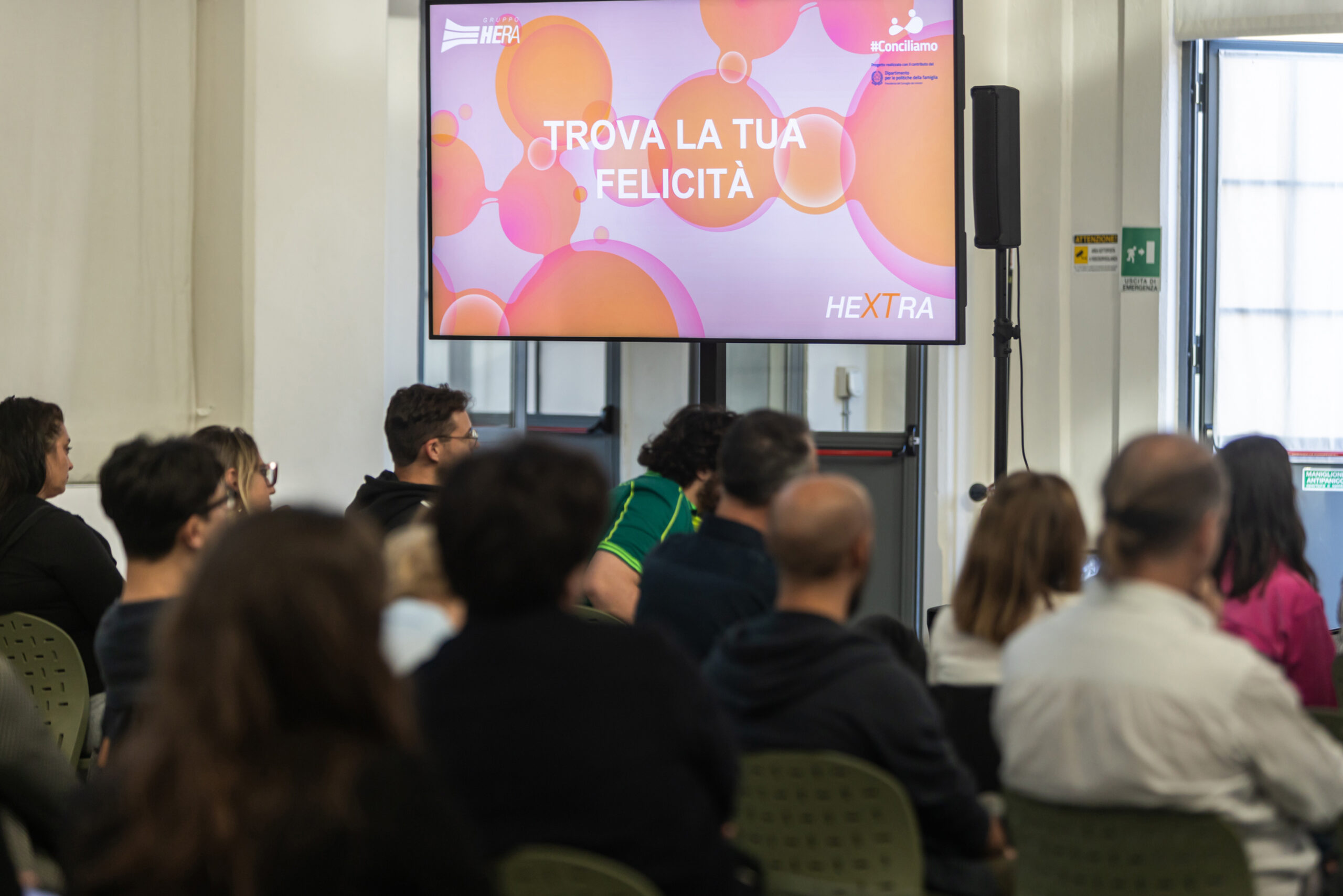
Hera invests in wellbeing
Building a context in which wellbeing is accessible, inclusive, and becomes an integral part of how people work and experience the company is the goal of the initiatives promoted by the Hera Group to place people at the centre. We discuss this with Alberto Apollo, Head of Workforce Planning, Compensation & Benefits, and HR & Organization Process Digitalization at the Hera Group.
Alberto, what tools is Hera adopting to support psychological and physical wellbeing in an inclusive way?
We are convinced that working on welfare directly contributes to the health of the organization, which ultimately depends on the wellbeing of the people who are part of it. Through a process of listening and engagement, we developed HExtRA, a welfare ecosystem that considers wellbeing in all its dimensions—physical, mental, family, and financial—addressing it in an inclusive and systemic way rather than as a collection of isolated initiatives. Today, for the first time, up to four different generations are working side by side within the company, each with diverse needs, priorities, and expectations. For this reason, inclusivity and flexibility are foundational elements of HExtRA. The aim is to provide coherent responses to the different stages of life, fostering genuine integration between professional and personal spheres. Within this framework, a range of concrete tools has been developed, operating on multiple levels:
- We promote physical wellbeing and prevention through dedicated campaigns, specialist medical visits, health check-ups, and telemedicine services: in the past year alone, more than 2,500 free medical visits were carried out.
- We support psychological wellbeing through free and ongoing programmes, including individual support sessions and resources to help people manage emotional states and maintain personal balance.
- We accompany people through family needs and key life moments, offering tools that support parenting, children’s education, and caregiving responsibilities.
- We strengthen financial awareness through financial education services, counselling, and practical tools to help people manage their financial resources.
Does your corporate welfare offering take into account inclusivity towards more vulnerable groups?
Inclusivity is a foundational element of our approach to welfare. HExtRA includes initiatives dedicated to people in situations of greater vulnerability through targeted tools and tailored pathways. A first area of focus concerns caregivers who look after elderly family members, dependents, or relatives in fragile health conditions. To support them, we have developed a dedicated training and information programme that provides practical tools, guidance, and opportunities for exchange and peer support. In parallel, we have introduced specific initiatives for people facing health-related vulnerabilities, such as the Return to Work project: a voluntary, personalized pathway designed to support employees returning to work after oncological conditions or other serious health issues. It integrates psychological support, physical activity, and moments of discussion and sharing. These initiatives are part of a broader model in which welfare is not only a tool to support wellbeing, but also a lever for inclusion, social sustainability, and employment continuity—adapting to different life circumstances and helping to create an accessible environment for everyone.
What is the role of leadership in building healthy workplaces that can prevent burnout and foster care?
The role of leadership is central: healthy workplaces are not built solely through tools or initiatives, but through behaviours, organizational models, and culture. At Hera, we start from a clear assumption: people’s wellbeing is a structural component of organizational sustainability. In this sense, leadership has the responsibility to make this approach tangible in everyday practice, translating principles into decisions, priorities, and ways of working. Within the HExtRA model, this translates into a longevity-oriented vision—understood as the ability to support people over time, across different life stages and professional journeys. In this framework, the HR function plays a key role as both an enabler and accelerator: it designs tools, creates organizational conditions, and supports leaders in translating wellbeing into concrete practices aligned with people’s evolving needs. In short, wellbeing is not only what the company provides in terms of benefits or welfare initiatives, but what people experience every day inside and outside their working life. It is precisely through the alignment of vision, tools, and leadership that organizations can build environments capable of preventing burnout and fostering a genuine culture of care.
Beyond welfare, what other corporate tools contribute to wellbeing?
Beyond welfare, wellbeing at Hera is supported by an integrated set of tools that relate to the very way work is organized. A first element is flexibility, enabled through established smart working models and results-oriented time management approaches, which support a better balance between professional and personal life. This is complemented by workplace redesign initiatives, where office spaces are rethought according to activity-based working principles, allowing environments to adapt to different operational needs and enhance the quality of the daily experience. Finally, we invest significantly in skills development through structured and specialized learning programmes aimed at strengthening autonomy, awareness, and the ability to navigate change.