
Disability Pride: the pride of existing
Can you explain what Disability Pride is?
It is an observance celebrated throughout the month of July that originated in the USA in 1990, to commemorate the entry into force of the Americans with Disabilities Act (ADA). The ADA is the law that still protects disabled people today in areas where they commonly face discrimination on a daily basis, such as access to public transport and buildings, working in suitable environments, etc. Disability Pride pays tribute to the struggles of the activists who made the implementation of the law possible with the famous Capitol Hill protest of March 12, 1990 (the Capitol Crawl, because the activists with physical disabilities, who were the majority, crawled to the top of the steps, leaving behind their wheelchairs or mobility aids). The same spirit later spread to the United Kingdom with the entry into force of the Disability Discrimination Act in 1995, now replaced by the Equality Act of 2010. In the United Kingdom, however, recognition of Disability Pride as a political celebration on a par with LGBT Q+ Pride was much more gradual. Although the most established organisations for the rights of disabled people, such as Scope and Disability Rights UK, had already been working on it since 2009, the first actual Disability Pride took place in Brighton in 2017, driven by Jenny Skelton following an episode of ableism experienced by her daughter Charlie, who became disabled after an accident. The first Disability Pride was organised through Facebook and around 2,000 people took part in the march. Since then, it has become deeply felt throughout the United Kingdom and is celebrated every year in various cities. There is also a Disability Pride flag, created in 2016 by American disabled activist Ann Magill and adopted as the official flag in 2021. In my opinion, it is one of the most beautiful symbols of the disabled community because it represents all disabilities and reminds us that no life is more valuable than another, that no person can be left behind. Today, Disability Pride is not only an act of protest and a demand for space in opposition to a society that ignores and excludes us, but also a celebration of the resilience, creativity and talent of the extraordinary people who are part of the disabled community. In Italy, it has been spreading in recent years, especially thanks to the influence of Anglo-Saxon disability studies on our activist culture. I think the media have played a fundamental role in this, and that they continue to be an extremely powerful tool for changing the social perception of disability.
For a long time, disability was portrayed mainly through a pitying or heroic lens. What are the risks of these representations?
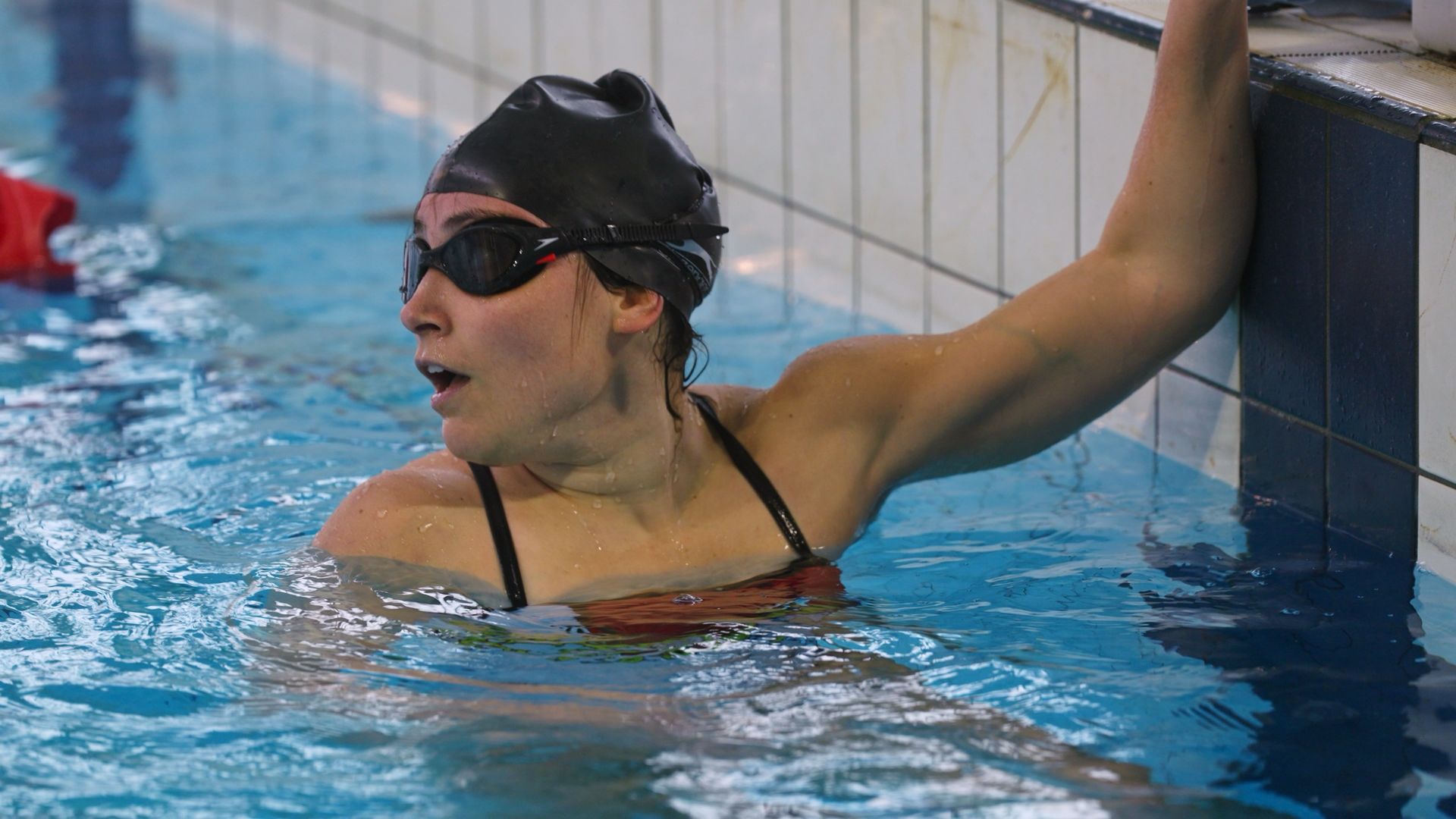
As I mentioned, the media have the power to shape and construct the reality around us. The danger of both these representations is that they are designed for a non-disabled audience that often has no experience of disability outside these stereotypes. If the only possible version of disability in the media (and therefore in the audiences that consume them) is the poor victim or the superhero, the result will be that disabled people in real life will be denied the right to be ordinary people, and this also prevents any progress in terms of rights. Simplistic representations force people to stop at the first impression, to absorb the single story they are being told even if it does not reflect the experience of the majority of those involved. In Italy, the pitying narrative may also stem from the Catholic influence that remains predominant and sees disabled people simply as needy and spiritually impure. Non-disabled people rarely stop to think that if, on the surface, I seem to struggle to walk along a pavement or access a building, I do not need pity or help, but infrastructure genuinely designed to accommodate all types of bodies and minds. The same applies to heroic narratives. I am not heroic if I am forced to climb stairs by crawling because I have no other way to access a building; it is the person who built the building who is putting my safety at risk because they failed to consider the existence of bodies like mine. The heroic narrative is also extremely common in sport. Paralympic athletes are always portrayed in the media as superheroes who accomplish feats “despite” their disability, but reality is different. On the one hand, this kind of sensationalisation diminishes athletes’ sporting achievements because it reduces them to a matter of sheer determination rather than genuine talent, physical effort and athletic preparation; on the other hand, it simultaneously leads non-disabled audiences to think that all disabled people who do sport can or should aspire to the Paralympics. I have been competing in swimming at national level for about twenty years, and when I train alone in public there is almost always someone in the next lane who asks me whether I am training for the Paralympics. It is incredible that it never seems to occur to anyone that the Paralympics require the same level of preparation as the Olympics. And it bothers me that it never occurs to anyone that I might not want to go to the Paralympics anyway. Swimming has always been my outlet; I would never accept turning it into a job even if I had the opportunity. I told my story with swimming in the documentary Power of The Current, which I hope will be released soon. The documentary was conceived by British director Alexia Barrett, founder of the production company PO7C Films, which specifically aims to promote different and respectful narratives about marginalised communities. With the documentary, we decided to present a different view of disability: the idea that it is also okay to be mediocre. Heroic narratives reinforce the idea that disabled people’s lives have no value unless they are extraordinary, and we wanted to communicate the opposite. Disabled people can and want to have “normal” lives; the only barrier is an ableist society. That is why I am convinced that involving disabled people in every area of media production is the only way to create non-ableist narratives and bring real experiences to the forefront. This is precisely what I am focusing on in my research.
Is it possible to be proud of being a disabled person?
The relationship with disability is a very personal matter, so I do not feel comfortable speaking for the entire disabled community. But personally, I am proud to be disabled because I was born this way. My body has always been disabled, and it is the only body I have ever had and will have for the rest of my life. I love my body as it is, and I am proud of where it has taken me so far and of everything it has allowed me to do. Without my disability, I would be a completely different person, and it is not a version of myself I have ever been curious to know. For me, pride means living a fulfilling life in defiance of a society that does not think I have the right to live in the first place. It means claiming my space and being happy in my body despite society saying I should not be. It means looking in the mirror and thinking that I am genuinely beautiful, intelligent and talented, not “despite” my disability. I am also proud to have managed to turn the anger caused by the discrimination I have experienced into something beautiful and constructive such as activism. But it is important to emphasise that I had to undertake a significant process of deconstruction to dismantle the ableist ideas that I myself had internalised. I am aware that disability is also a major trauma, not only in the case of acquired disabilities, but also because of minority stress. For this reason, living in a disabled body-mind is an act of politics, of resistance, and it is not always easy. Disability Pride is a beautiful thing, but often being disabled simply sucks, and there are many aspects (e.g. chronic pain) that even social changes cannot completely resolve. I think that, especially in activism, there is a tendency not to talk about this because we still have to fight for the right to be considered normal rather than pitied.
Today, what do you think are the main cultural and political battles that are still open for disabled people?
I would say, in general, the right to exist for all disabled people regardless of the type of disability, expressed through a society that anticipates and welcomes the existence of every individual with absolute respect, not only in physical spaces but also in media representation, social interactions, language and care. Even in movements for marginalised communities that pride themselves on being inclusive, or in certain forms of feminism, disability remains the only category that is either not considered or considered too late. Ultimately, ableism has the same roots as racism, classism, homo- and transphobia, and all other forms of discrimination. We should fight intersectionally to eradicate the system that oppresses everyone. And let us remember that at some point in our lives we will inevitably all become disabled (through accidents, illness, old age, wars, climate change). Ignoring the issue simply creates a world that is unliveable for everyone.