
Beyond the reinforced doors: when rebirth comes through art
Behind bars there is life. In the case of juvenile detention facilities, there are young lives whose past cannot be judged without having at least come to know it. Boys and girls looking for guidance, an opportunity, an affection that has often been missing. If prisons, as stated in Article 27 of the Italian Constitution, are meant to have rehabilitation as their purpose, it is not right to think of them merely as a detention tool. A tool too often characterised by inadequate services and unbearable temperatures. Permeated by a long monotony, a greyness and a flatness that certainly do not restore hope to the condemned person, nor do they represent an incentive for their redemption.
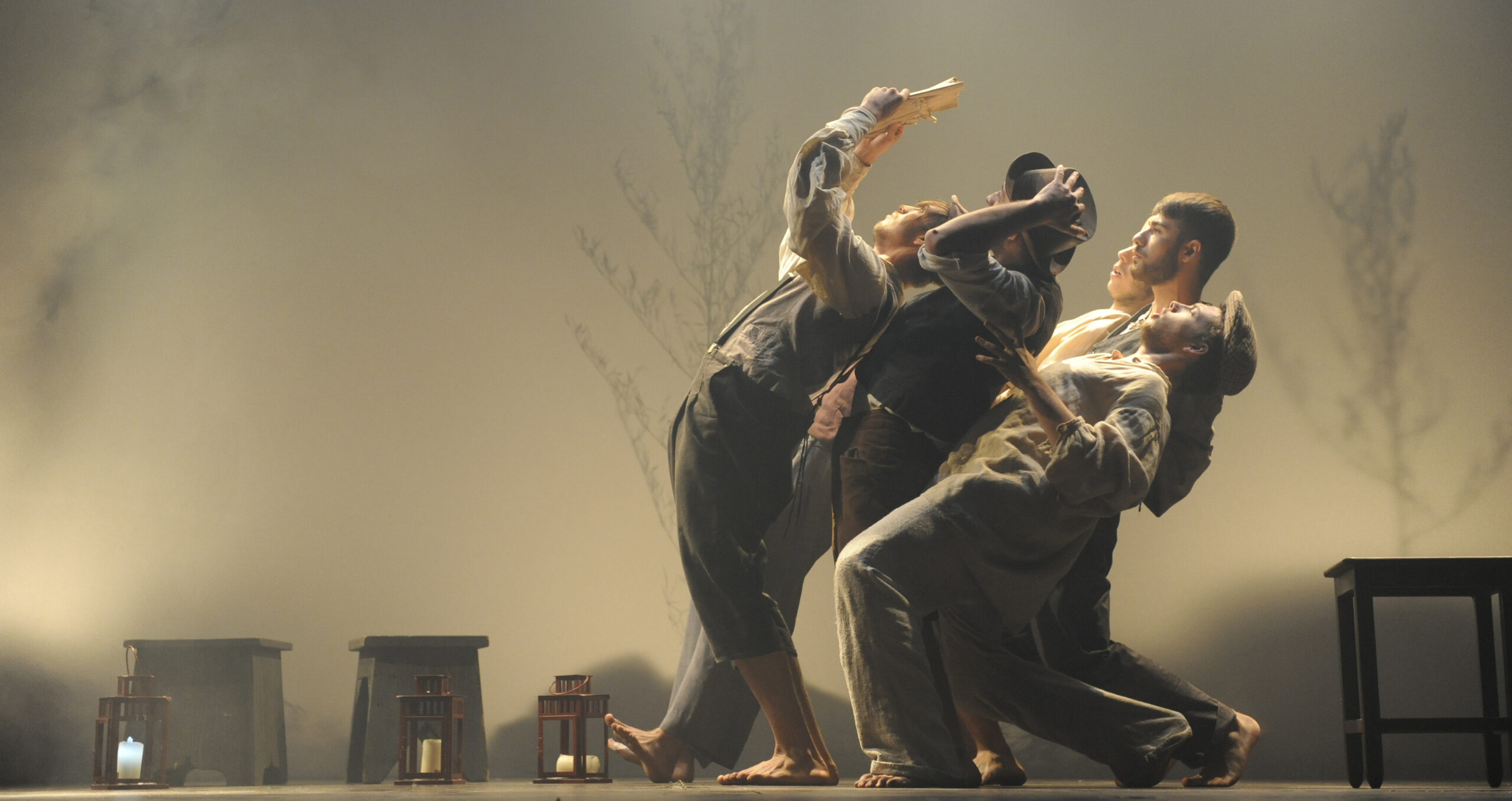
It is in this context that educational activities, vocational training and cultural workshops become essential to ensure that, when those who have made mistakes have to reintegrate into society, they can do so with confidence and with the awareness that there is always an alternative. Among the positive examples found in Italy is the Cesare Beccaria Juvenile Penitentiary in Milan, which houses the Puntozero theatre. More precisely, it is the first public performance theatre in Europe inside a juvenile prison, with an entrance open to the city. “A place born as a space of beauty, inspiration, possibility and celebration,” as stated on its website, “where art becomes a concrete experience.”
Giuseppe Scutellà is the artistic director. After graduating from the Paolo Grassi School and earning a degree in DAMS from the University of Bologna, he arrived at Beccaria 31 years ago and fell in love with the theatre workshop, through which, over time, he met travelling companions such as actress Lisa Mazoni, now president of Puntozero. All of Scutellà’s work rests on a firm conviction: “That true listening,” he tells us, “does not mean asking young people what they want or what they need, but putting them in a position to express what they want. Giving them the words to describe how they feel and what they are looking for.”
Located at 20 Via dei Calchi Taeggi, Puntozero has two entrances, one from the street and one from inside the institution. A structure that effectively symbolises the idea of continuity between prison and the outside world. This characteristic is one of the first reasons for pride for the theatre’s board: “We have gone beyond the bars and the reinforced doors. We literally knocked down a wall of the prison and opened our own space to the community,” explains the artistic director. “The boys and girls in detention come here to work. We give them training both in theatre professions and in acting. It is, in fact, the alternative to the cell. They leave at 9:00 in the morning and return in the evening to sleep. We eat together, cook together, rehearse together and take care of running the theatre. On stage there are also young people living in residential communities, student volunteers and professional actors. Generally speaking, the protagonists are the young people in detention, but our challenge is to make the audience forget that. We want to go on stage with a performance that does justice to their talent, regardless of the characteristics of the person.”
Carrying out this intense physical and cultural work at Beccaria is not only synonymous with love and commitment; it is also a challenge, especially because of the inherent limitations of the facility. “I must admit that there has always been a great understanding both with the management and with the prison police officers. We also have the support of the Municipality of Milan and of the Ministry of Justice itself. The spaces, however, are limited, and this restricts the number of participants. It is not only a matter of general overcrowding, but also of obsolete facilities, lacking maintenance, on which no long-term investments have been made. There are few spaces that can actually be used. Our internal theatre workshop, for example, could accommodate at least fifteen young people, but there is simply no way. At most, we can hold classes with six or seven people, which means half.”
The largest space is the theatre itself, carefully maintained, with red velvet seats and golden details on the walls. “We built it with them, with the boys and girls, to bring beauty back to the prison, but also to create jobs. We knew that letting them experience other possibilities and other ways of living first-hand would really make a difference in shaping their future, and time has proved us right. Some of them started working in the theatre while serving their sentence and the judge, having appreciated their progress, granted them alternatives to detention. Some continue from residential communities and homes. There have been countless successful probation programmes, even though they are rarely talked about.”
Puntozero therefore offers not only training and the possibility of having a stable job, but also the closeness and security that young people are looking for. “We give our time, the most precious resource, and we are repaid with endless satisfaction. One of the most moving scenes I have ever witnessed happened very recently. A boy who works with us leaned out towards the bars and began reciting Hamlet’s monologue. He was rehearsing his part, and seeing him moved me enormously. I also remember another boy who, a couple of years ago, was reported because he was lowering a plastic bag with a rope from the third floor to a cell on the second. An officer thought it was drugs, but when he retrieved the bag, he discovered that it contained the script of Romeo and Juliet.”
Shakespeare’s love story, however troubled, perhaps does not appear among Puntozero’s productions by chance. What the young people at Beccaria desire most, in fact, is affection, whether as a substitute for that of parents, who are either absent or far away, or in addition to the affection they have already received. And this is where the classics come into play, dominating Puntozero’s programme because, as the director explains to us, they are “useful for giving words to emotions”. Words that are extremely useful for young people looking for tools to deal with what awaits them beyond the prison walls. “Some of them come back to say hello,” Scutellà confides. “They knock on our door, come upstairs with us and perhaps become emotional, thinking about the happiness this place gave them during the most difficult moments of their lives. It warms the heart and repays us for all our efforts. More than 80% of the young people we have met so far have a normal, happy life, and some of them now work in major institutions such as Teatro La Scala, Piccolo Teatro and Paolo Grassi. Among them is a famous photographer who now collaborates with Elle Decor, Vogue and other fashion magazines. Our pride is being able to offer art as a tool for redemption. It means bringing beauty back to a grey place.”