
When pride becomes belonging
Community, role models, and psychological safety can transform Pride from a moment of visibility into an everyday experience. There are moments in every professional life when a decision is made silently. Whether to correct an assumption. Whether to mention a partner.
Whether to share a personal story during a team conversation. Whether to reveal a part of ourselves – or keep it hidden. For many LGBTQ+ people, these decisions are not exceptional. They are repeated throughout a career, often in small, ordinary moments that others may never notice.
When we think about Pride, we often think about visibility. We think about flags, campaigns, events, and public celebrations. Visibility matters. It creates recognition, representation, and a sense of community. But visibility is rarely the starting point. Before visibility comes something else: belonging.
People do not become authentic because they are encouraged to be authentic. They become authentic when the environment around them makes authenticity feel safe. When they trust that they will be respected, valued, and included – not despite who they are, but as they are. This is why the conversation around Pride in the workplace cannot begin and end in June.
Today, one of the most important questions organizations can ask themselves is not how visibly they support inclusion, but how consistently they create the conditions for it. How do we build workplaces where people can bring their whole selves without turning their identity into a performance? How do we move beyond symbolic gestures and make inclusion part of everyday culture? These are among the key questions shaping the broader conversation around Pride and belonging.
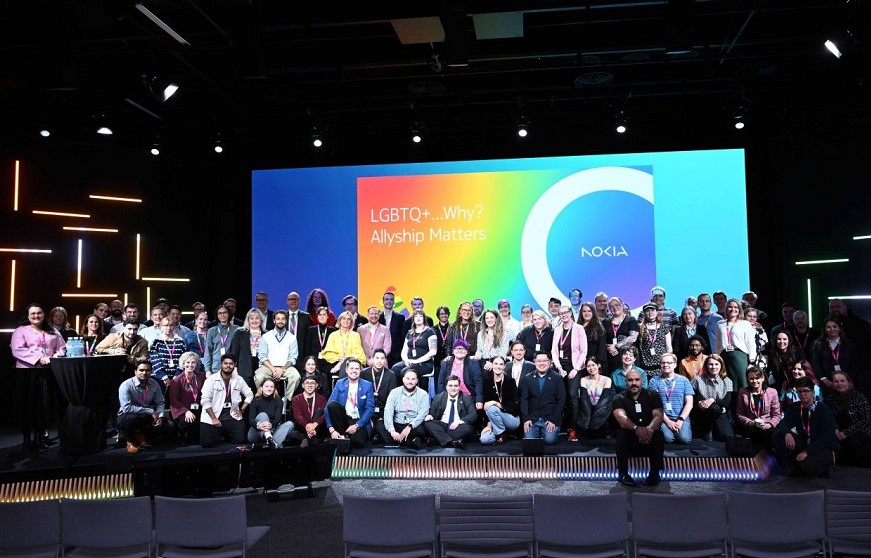
At Nokia, we have learned that belonging rarely happens by accident. It is built through relationships, shared experiences, and communities that help people feel less alone. This is one of the roles played by EQUAL!, Nokia’s employee resource group for LGBTQ+ employees and allies. Through support, education, dialogue, and active allyship, EQUAL! helps foster a workplace where different identities can be acknowledged and respected. Open to employees across the globe, the community brings together people who share a common belief: everyone deserves the opportunity to thrive regardless of sexual orientation, gender identity, or expression.
Belonging also helps us recognize that the desire to be accepted is a universal human experience. While LGBTQ+ colleagues may face specific experiences of exclusion or uncertainty, the need to feel safe, respected, and valued at work connects us all. In this sense, Pride can help broaden the conversation from visibility to everyday inclusion. It reminds us that belonging is built through consistent actions: listening with respect, making space for different perspectives, and helping colleagues feel able to contribute
as themselves.
Communities matter because they create connection. They remind people that inclusion is not an individual responsibility but a collective one. They create spaces where questions can be asked, experiences can be shared, and allies can learn how to support others more effectively. But community alone is not enough. Belonging also requires people to see what is possible. One of the challenges often faced by LGBTQ+ professionals is that leadership can sometimes feel difficult to imagine when there are few visible role models. This is why representation, inclusive leadership, and everyday allyship matter: they help people see that authenticity and professional growth can reinforce one another.
When people see leaders who are authentic about their experiences and committed to creating inclusive environments, they gain more than inspiration. They gain a clearer sense of what is possible for themselves. Inclusive leadership is not only about who occupies leadership positions. It is also about creating space for different perspectives, encouraging open dialogue, and fostering cultures where people feel able to contribute without having to hide aspects of who they are.
The impact of this kind of leadership extends beyond career development. Visibility becomes meaningful when it demonstrates possibility. Before people can see themselves as future leaders, they often need to see that someone like them already belongs there. Role models do not simply represent success; they signal that authenticity and leadership are not mutually exclusive. They help transform inclusion from a promise into a lived reality.
Ultimately, this is why Pride continues to matter. Not because it is a celebration confined to a particular month, but because it invites us to reflect on the kind of environments we are building every day. Environments where people feel safe to express themselves, contribute their ideas, and bring their full humanity to work. Perhaps the most meaningful measure of Pride is not how much visibility we create in June. It is whether, in October, February, or any ordinary Monday morning, people still feel they belong. When belonging becomes part of culture, Pride stops being a campaign. It becomes a shared experience. And when people no longer must choose between being themselves and fitting in, visibility is no longer an act of courage – it becomes a natural expression of trust. That is where authentic inclusion begins.