
LGBTQIA+ community: rights belong to everyone
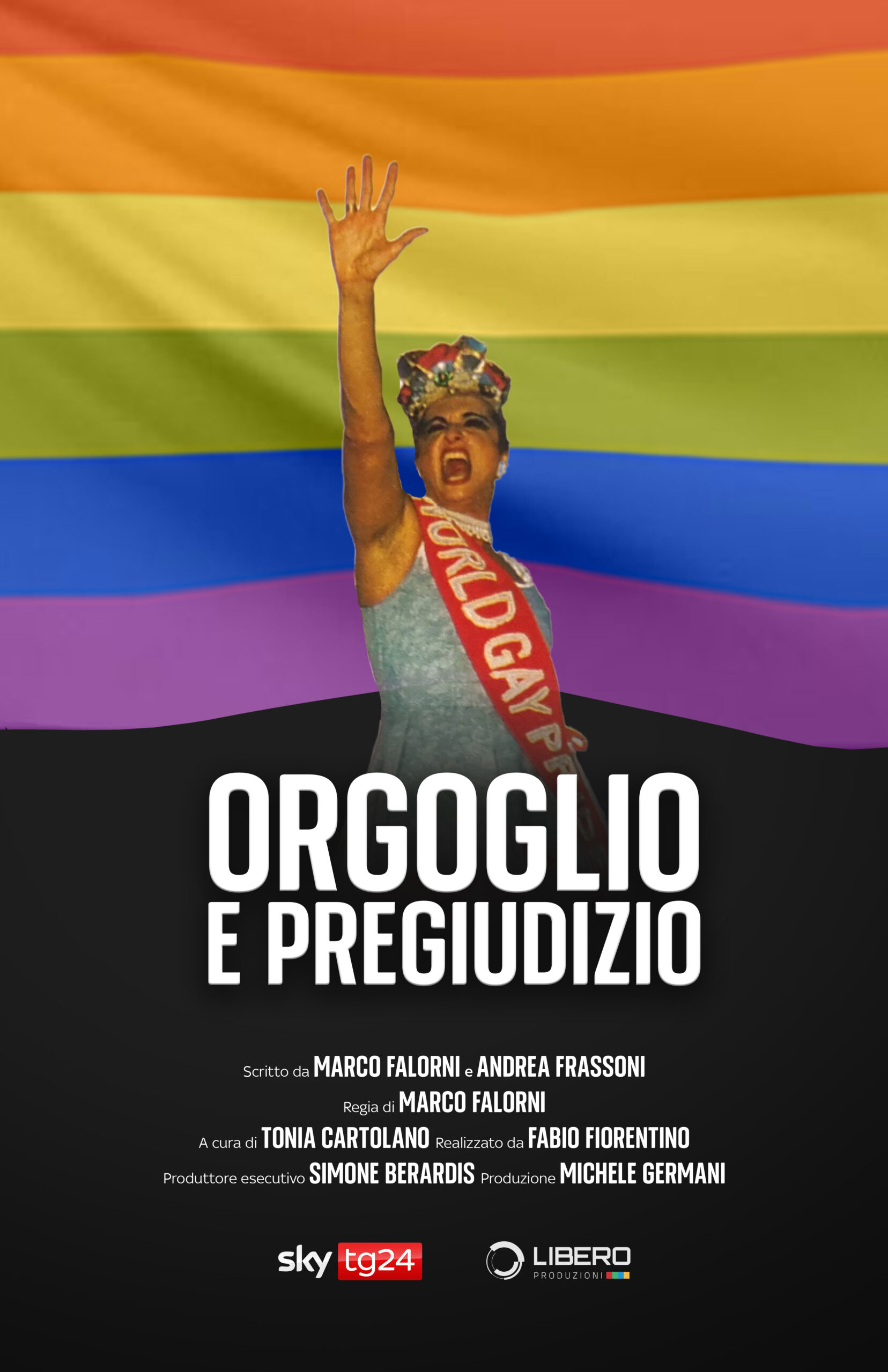
“On that day, each of us made peace with ourselves, with our own story. We would no longer allow anyone to spit on us. We reclaimed our entire piece of the world.” These are the words that open Pride and Prejudice, a docuseries produced by Libero Produzioni in collaboration with Sky TG24, which retraces the history of the Italian LGBTQIA+ movement. Across its three episodes, viewers are taken back to the 1970s on a journey through the final decades of the 20th century, the 2000 World Pride in Rome, and key and significant events such as the approval of Italy’s civil unions law and the 2025 Budapest Pride.
“The project is a valuable historical document, a sort of small intergenerational archive in which the protagonists have chosen to share a brief glimpse of their own stories, which are part of the larger history of rights,” explained Tonia Cartolano, the journalist who oversaw the production of the docuseries for Sky TG24. “This is why the documentary becomes a work in support of rights, rather than against those who deny them. After all, recognising rights does not take freedom away from other people.”
Pride and Prejudice (available on demand on Sky and streaming on Now) combines a historical reconstruction of the main milestones that have shaped the achievements of the Italian LGBTQIA+ movement with the intimate and personal testimonies of those who experienced those struggles firsthand and of those who, today, continue to uphold their values. The docuseries grew “from the idea of telling the story of an event that we believe was extremely important on an international level: the 2000 World Pride,” explained Andrea Frassoni, co-author of the series together with Marco Falorni. “At the same time, we wanted to take stock of the current state of LGBTQIA+ rights.”
Historical facts are at the heart of Pride and Prejudice: “From the very beginning, the plan was to create an unassailable product, following a chronological structure so that we could avoid criticism—not of the series itself, but concerning the authenticity and accuracy of the material. Data and facts had to be central,” Falorni explained. “For this reason, the series was created through an objective and non-partisan analysis, with the aim of portraying the milestones of the Italian LGBTQIA+ movement as comprehensively as possible. In this way, the young people who take part in Pride marches today will have an additional tool to understand what happened when they were not yet there.”
The historical documentation is complemented by the biographies and personal accounts of well-known figures such as Vladimir Luxuria, Elly Schlein, Francesco Rutelli, Francesca Pascale, Serena Bortone, Cathy La Torre, Alessandro Cecchi Paone, Nicky Vendola, Imma Battaglia, Franco Grillini, and Monica Cirinnà. “It was wonderful to listen to what they had to say because, through their words, they were handing down precious memories of those years to us,” Frassoni explained. “We involved people who were not necessarily associated with the political left—which has historically been closer to these issues—because our intention was to send a clear and unequivocal message: rights belong to everyone, because they are not something that is taken away from one person when granted to another. Yet we live in a polarised society where, at times, reasoning gives way to slogans.”
Today, Pride and Prejudice therefore represents a small intergenerational archive in which people who are more or less well known, politically engaged individuals, and young people in their twenties who are allies of the LGBTQIA+ community have chosen to share a brief glimpse of their own stories. “Listening to a young man or woman explain why they take part in Pride every year is a way of getting closer to issues that are too often exploited for political purposes,” Frassoni said. “We put the individual at the centre. Anyone who wanted to take part was more than welcome,” Falorni added.
If they had to choose the most intense moment of the production, what would it be? “Definitely the collection of the statements we placed at the end, which seek to convey a powerful message: in these dark times, it is both meaningful and important to respond in a constructive and peaceful way in an effort to change things,” Frassoni said. For Falorni, however, it was “the three days spent in Rome together with the guests who took part in the docuseries: it was scorching hot, yet everyone was eager to be there, to share their stories and emotions.”
In addition, in June and July 2026, Pride and Prejudice became an exhibition, Pride and Prejudice Exhibition, as part of the Sky Inclusion Days and Pride Month, in collaboration with the LGBTQ+@Sky network. The project moved from the small screen into Sky’s offices: each floor of the company’s headquarters was dedicated to a different part of the LGBTQIA+ community’s history, through clips from the docuseries shown on various screens and stories presented graphically on advertising displays.
“We are extremely proud that Sky TG24 itself was the co-producer of the docuseries: not just Sky as a company, but an actual news organisation that chose to support us in this project,” the authors explained. And so, anyone entering Sky’s offices could discover some of the most significant milestones in the LGBTQIA+ movement before starting their shift, during a break, or simply while moving from one space to another. Then, for those who were more curious, all that remained was to watch the docuseries.