
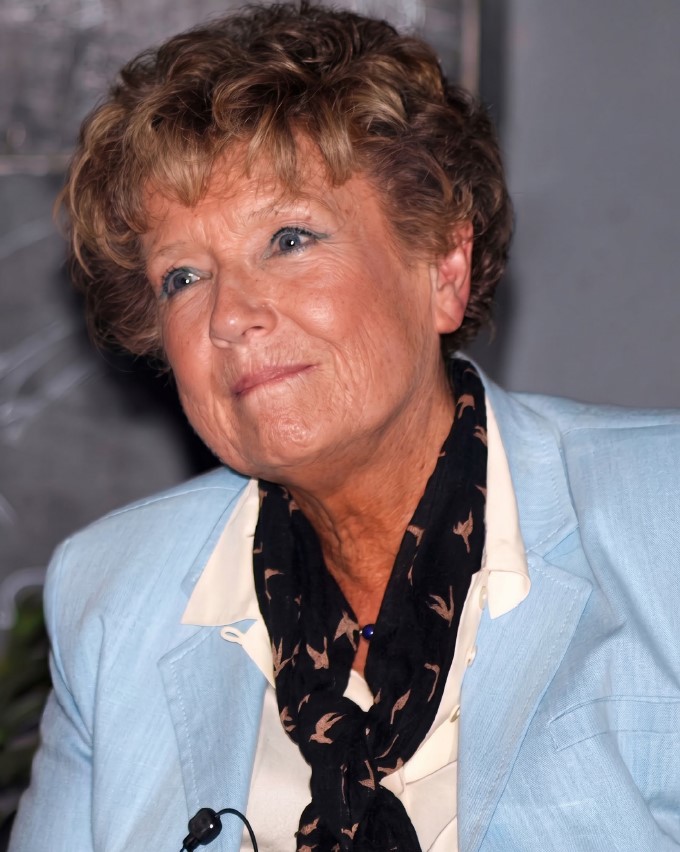
Dacia Maraini: «I want to be optimistic, history does not turn back»
Looking back on a lifetime of writing and activism on women's conditions, with Teatro della Maddalena, which you helped found in 1973, remaining one of its best-known milestones, what has truly changed in Italian culture regarding women's roles, and what has merely shifted on the surface?Feminism and the 1968 movement were two peaceful revolutions (apart from some isolated acts of violence, condemned by most people) that changed the customs and social norms of our country. They did not change the economy, which follows different paths, but they did change social customs and the legal system. Let us remember that, before the advent of feminism, there were openly misogynistic laws that were only repealed in the 1970s and 1980s. I am referring to family law, under which all rights belonged to the pater familias, just as in the days of the Roman Empire. There was the crime of honour, there was shotgun marriage, rape was prosecuted only as an offence against public morality rather than against the individual, and women were barred from entering certain professions. In short, a great many civil rights that had been denied to women were finally recognised by law. Is that so little? Naturally, after three thousand years of history, deeply ingrained habits and ideas about identity, rooted in many people's minds, are slow to adapt. This is where the rise in femicide comes from.
Of all the works you have devoted to violence and women's conditions – from Marianna Ucrìa to Buio, from Voci to L'amore rubato, to give just a few examples – which do you feel is most relevant today, and why?
I believe all four books contain something that remains relevant today. Because, as I said, the world of the Fathers is struggling to adapt, and new forms of violence against women who seek to exercise their newly won rights are emerging.
You have described femicide as a “cultural tragedy” rather than a criminal-law problem. Why does a phenomenon with such ancient roots continue to persist despite decades of laws, movements and achievements?
Femicide has always existed, but today it is on the rise, and I believe the explanation lies precisely in the reaction of some men to the new freedoms women have claimed for themselves. When a man identifies his masculinity with possession and that possession is challenged, he loses control and would rather kill than accept her will. This is a true tragedy rooted in a profound crisis of identity. By killing the woman they consider their property, they lose everything: their family, their children, and they end up in prison. Yet none of this stops the explosive rage within them.
At the end of 2025, Italy finally introduced the standalone crime of femicide into its Criminal Code, unanimously approved by the entire political spectrum and punishable by life imprisonment. Meanwhile, even recently, figures such as General Vannacci have questioned whether femicide should exist as a distinct criminal offence. What would you say to those who argue that giving violence against women a specific name is merely a linguistic indulgence rather than a necessity?
I would tell Vannacci that his is an archaic and misogynistic view. When a phenomenon becomes so widespread and involves the same recurring pattern and type of crime, it acquires its own name to distinguish it from other offences. Just as we have infanticide and parricide, we must give a name to a growing phenomenon (let us remember that in Italy a woman is killed by her husband, partner or boyfriend every three days) and call it femicide. Women are not killed for different reasons, but simply because they demand an autonomy that, within relationships, has gone unrecognised for millennia. For some men, the civil rights women are demanding do not represent justice, but merely a licence and an affront to male identity. After all, let us remember that the crime of honour was abolished in 1981, and some still regard men's supposed ownership of women as a natural right sanctioned by religion.
Alongside the femicide law, Parliament was also discussing reform of the law on sexual violence, which was supposed to introduce the principle of “free and current consent”. That bill, unanimously approved by the Chamber of Deputies, nevertheless stalled in the Senate, where it was rewritten, shifting the emphasis from having to prove an explicit yes to having to prove the victim's opposition. Why, in your opinion, was unanimity lacking precisely on the most basic distinction between consent and refusal?
This is a misogynistic and mean-spirited position. Anyone who has taken even a little interest in the issue knows that women often freeze when they are attacked and are unable to defend themselves through explicit actions. For millennia, women have been told that it is always their fault because they seduced, schemed or invited violence upon themselves. Many women, especially the most vulnerable, have internalised this paralysing sense of guilt.
Has the presence of a woman at the head of the Italian government changed anything real and profound in the country, or is it merely the exception that confirms and reinforces the rule of the machismo in politics so well represented by US President Donald Trump?
The fact that a woman has been elected Prime Minister is a significant and welcome development from a symbolic point of view. It means that a taboo has been broken. But people must ultimately be judged by their choices, not simply by the positions they hold. And unfortunately, Giorgia Meloni's choices are not favourable to women. She also falls into curious contradictions: she proclaims her commitment to God, Country and Family, yet she had a daughter without being married and left her partner, showing little regard for the family they had recently formed.
You have already identified social media anonymity as a factor that amplifies misogyny. Today, the so-called manosphere has spread online, made up largely of very young men who identify women and feminism as their number-one enemy. Why are these narratives, which we thought had been left behind, managing to attract so many young men?
Very young men feel that the role of the supposedly superhuman white male is in crisis. And that is true. But how should they respond to this crisis? That is the whole point. To overcome a crisis, we need to understand its historical origins, grasp its deeper causes, question the privileges that have accumulated and are now being challenged, and accept change in the name of justice. Some men do this, and they do it very well. But they are men who, because of their upbringing, family traditions and intellectual openness, are prepared to question themselves. Others, however – and I do not know whether they are the majority or simply a dangerous but vocal minority – believe they can resolve the issue by getting worked up, attacking, denigrating and resorting to violence. What they fail to understand is that this is a foolish and ultimately self-defeating reaction. Statistics show that, on social media, the people who are most frequently attacked are women and homosexual people, followed by politicians and others. This shows how social media spread and infect young people with these archaic attitudes of rebellion against the loss of privileges. But they resemble those who, in previous centuries, rebelled against people seeking to abolish slavery. It took a civil war to abolish a brutal social injustice that had existed for centuries and on which many people depended. Unfortunately, cases of slavery still exist, but they are now illegal, whereas previously they were permitted by law. And that is already an achievement. Little by little, I believe that women's newly won rights will also come to be accepted, although I do not know how long it will take. When we look at what is happening in non-democratic countries, and there are many of them, it is easy to feel discouraged. But I want to be optimistic: after so many childish and reactionary rebellions, things will change, because history does not turn back, even if it sometimes takes strange twists and turns.