
25 years of inclusion with Fondazione Adecco
Fondazione Adecco ETS is a private operational corporate foundation established in 2001 with the goal of contributing to the development of a more inclusive labor market. It operates from a systemic perspective, promoting multi-level and multi-stakeholder projects in collaboration with public and private actors, with the aim of increasing employability among people in vulnerable situations: incarcerated individuals, refugees, people with disabilities and autistic individuals, NEETs, unemployed women, women with caregiving responsibilities, and survivors of gender-based violence and/or human trafficking.
The Foundation’s work develops along complementary lines: employment education and job inclusion pathways for people in vulnerable situations; DE&I programs for companies; capacity-building initiatives for Third Sector organizations; and support for grant-making bodies in designing calls focused on social and labor inclusion.
The year 2026 marks the 25th anniversary of Fondazione Adecco per le Pari Opportunità, now Fondazione Adecco ETS, the first organization established by a staffing agency in Italy with a specific focus on labor inclusion, at a time when these issues were still largely unexplored.
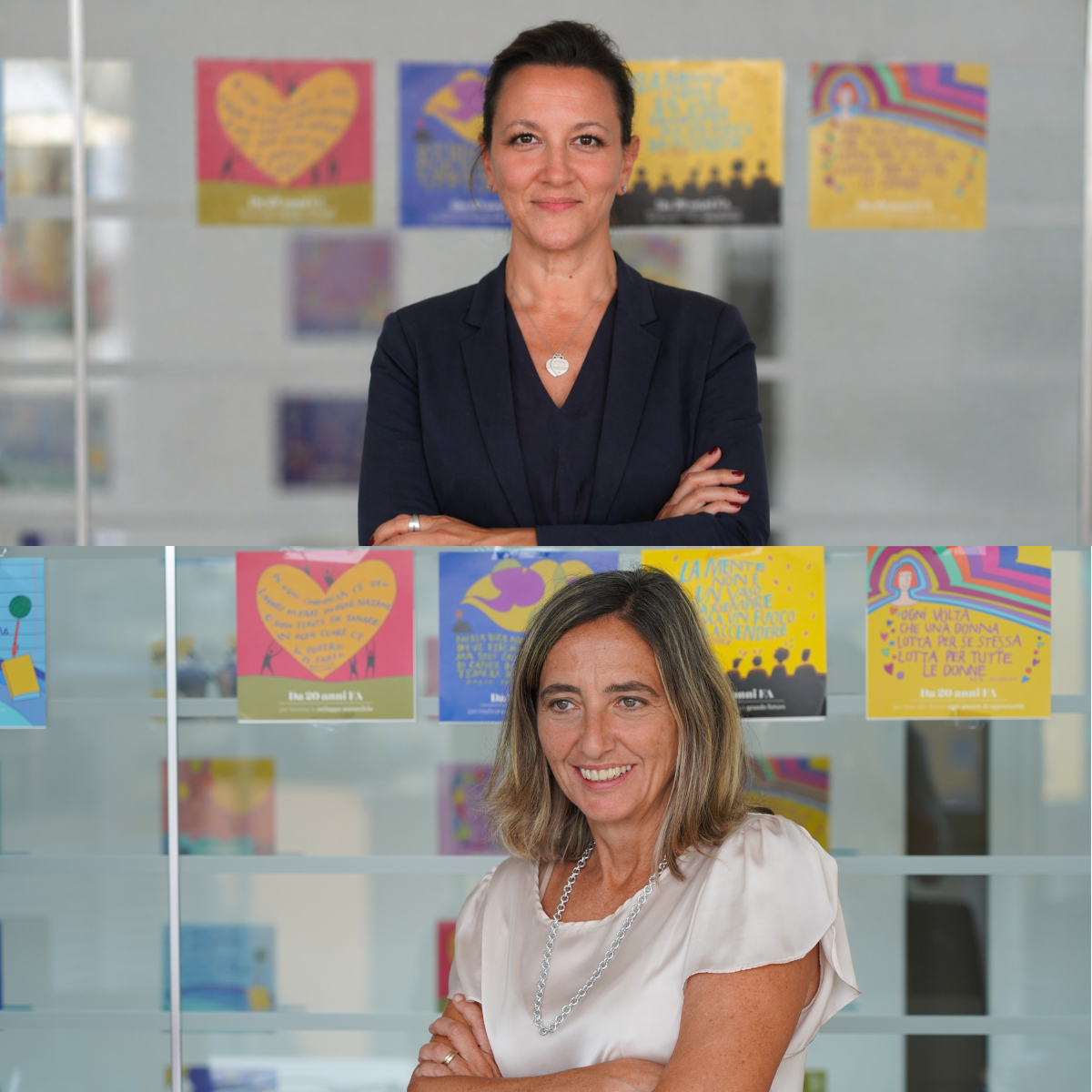
Fondazione Adecco was established in 2001. Who better than you to tell us about the evolution of DE&I principles over the past 25 years? How have you seen the world of work change?
LC: When the Foundation was established, the conversation focused mainly on equal opportunities, especially in relation to gender. Gradually, things changed: companies became increasingly aware of their responsibilities, and the conversation shifted toward a broader concept of diversity. Over the years, even the terminology evolved: from “equal opportunities” to DE&I. This was not merely a rebranding exercise, but a profound maturation. While the focus once lay on removing barriers, today the emphasis is on recognizing diversity as a value and fostering an environment free from prejudice, with the awareness that every individual starts from a different situation and requires specific support to achieve the same goals.
MI: In 2001, when we began talking about the labor inclusion of people in vulnerable situations, the issue was far from mainstream. People spoke of “fragile categories,” isolating the concept of fragility from the person as a whole. We had the courage to recognize the complexity of the factors creating vulnerability and preventing access to the labor market, and to act accordingly. Today, we work to empower people to become autonomous and able to express their full potential, regardless of their condition.
Fondazione Adecco works with different forms of vulnerability. Among these, you directly or indirectly encounter the reality of caregivers. In your experience, what does this role entail today, and what impact does it have on personal life, especially in terms of balancing caregiving and work?
LC and MI: The Italian labor market is significantly behind in addressing caregiving, one of the most widespread yet least recognized forms of contemporary vulnerability. The population is aging, active aging within companies is accelerating, but policies capable of managing this phenomenon are still lacking — and it cannot be underestimated. Caregivers face many critical challenges in supporting a family member. First and foremost, they often have to interrupt their professional activity to meet caregiving needs. If we do not adequately prepare to support these situations — which will become increasingly common — we fear the repercussions on the labor market will be extremely severe.
Why do caregivers tend to remain invisible?
MI: Quite simply because caregiving has always been considered a personal or family responsibility, not something recognized as having a broader societal impact (and consequently an impact within companies). Culturally, it has always been difficult to give voice to caregiving. Many aspects associated with caregiving have historically been linked to women and to a model of silent sacrifice that asks for nothing in return. It is a self-perpetuating mechanism. Companies should be responsible for giving people a voice, listening to them, asking what they need, and providing the tools that enable them to continue working effectively while carrying out caregiving responsibilities.
How does Fondazione Adecco act as a bridge in this learning process?
LC: We create awareness and educational initiatives within companies to foster cultural change. Our dream — and we are beginning to work toward it with some partner companies — is to establish a working group to understand how to bring this issue to the forefront in organizations. However, we are still at the beginning. The goal is to start truly talking about this topic and understanding how to communicate it effectively. Consistent with its modus operandi, the Foundation has acted, continues to act, and will continue to act as a bridge between emerging social needs related to labor inclusion and the corporate world, creating a network that takes into account everyone who supports people facing vulnerabilities. Everyone should have access to a social support structure.
LC and MI: Fondazione Adecco addresses the challenge of caregiving from two complementary perspectives. On the one hand, by supporting the employment autonomy of people with disabilities, autistic individuals, or incarcerated individuals, there is a natural easing of pressure on families. On the other hand, we work directly with people — especially women — who have had to sacrifice their careers for caregiving reasons, guiding them through a process of professional rediscovery that restores both identity and autonomy.
Let’s make a small prediction: how do you envision the next 25 years?
LC: We will continue to be pioneers, identifying new vulnerabilities and emerging needs early on in order to support the people experiencing them.
MI: I do not see the Foundation as an institution that grows, but as an organism that learns: if, in 25 years, it is different from what it is today, it will mean that it truly listened to its time.