
Well-being as a strategic choice
Care for people’s health means creating conditions of connection, listening, and concrete support at Chiesi, accompanying them through different life moments, with diverse lifestyles, vulnerabilities, and needs. The approach is holistic and inclusive: it integrates physical, mental, and emotional dimensions, combining a global strategic vision with accessible and personalized initiatives. In this perspective, health becomes an integral part of a sustainable work experience, capable of generating individual well-being, healthy performance, and a positive impact that goes beyond the company.
We discuss this with Katyusha Lorenzelli, HQ Wellbeing Manager; Federica Tafuro, Coordinating Occupational Physician; Francesca Grassi, Head of Auditing, Due Diligence & Supplier Qualification, GMP & Medical Device Unit; Marilena Petrera, Head of Clinical Quality Systems Unit; Eleonora Cipollari, Clinical Supply Manager; and Cristiana Parenti, Label & IFU Senior Specialist.
The People Care Catalogue: an inclusive and participatory wellbeing model
Within Chiesi’s wellbeing strategy, the People Care Catalogue represents the framework that gathers and makes visible the company’s commitment to caring for its employees in a concrete and inclusive way. It is an ecosystem of initiatives ranging from health to psychological well-being, from parenting to work-life balance, from prevention to awareness, with the aim of responding to diverse and evolving needs. A distinctive element of the Catalogue is its participatory nature. Many initiatives arise from active listening to people and from the voluntary contribution of colleagues who share professional skills, personal experiences, or passions. In this context, health plays a central role: not a separate area, but a cross-cutting dimension that runs through the entire catalogue.
How does the People Care offer manage to be truly accessible and inclusive, taking into account different needs in terms of lifestyles, vulnerabilities, or personal conditions?
KL: Within the People Care offer, accessibility and inclusion are first and foremost built through listening. The Wellbeing Point, a listening desk available both in person and online, is a space where people can receive information, propose new initiatives, or share personal skills to be made available to the corporate community. It is also a place where deeper and unexpected needs emerge, often going beyond the initial request and allowing the identification of vulnerabilities or specific needs. The Health area then translates into a concrete and diversified offer designed to respond to different needs. In addition to company clinics, each person has access, for example, to osteopathic visits, nutritional pathways, and thematic support desks. The one dedicated to women’s health, for instance, supports colleagues through different life stages, from pregnancy to menopause. A distinctive element is the direct involvement of people: some initiatives originate from internal expertise, such as first aid and pediatric choking courses led by a colleague. This strengthens a sense of belonging and values skills that are often not visible in professional roles. At the same time, needs collected through the listening desk enable new initiatives, such as meetings on eating disorders, responding to emerging needs within the company community.
Health as a pillar of wellbeing
This same participatory and inclusive approach finds a particularly meaningful expression when focusing specifically on health, through dedicated, concrete, and accessible initiatives closely aligned with real needs, strengthening the link between individual well-being, awareness, and shared responsibility.
Through the Health Project, Chiesi promotes a vision of well-being that integrates physical, mental, and overall health. How is this holistic approach translated into the daily life of people working in the company?
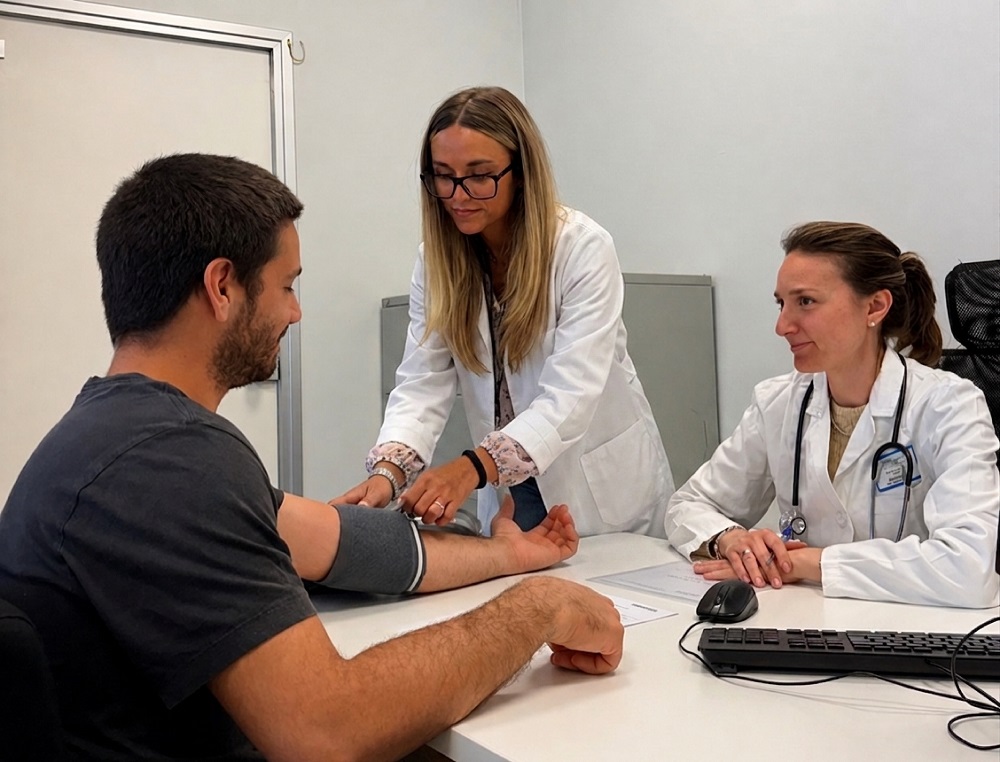
FT: The Health Project enables people to take care of themselves within their daily work routine in a simple, accessible, and continuous way. It is a multi-year initiative supported by an internal tool that allows employees to book visits and check-ups at the most convenient times, reducing organizational and logistical barriers that often make it difficult to take care of one’s health. Therefore, it does not only offer healthcare services, but also promotes knowledge and awareness on issues that are often normalized or underestimated. Activities take place directly on company premises and include prevention and health promotion pathways in different areas, including cardiovascular, respiratory, and oncological health. Smoking cessation programs are also provided, with psychological support, as well as screenings carried out in collaboration with the public healthcare system. A key element is the ability to detect health needs early, offering an initial level of assessment that can then guide further investigations. The high internal participation confirms the value of this approach, which expands the role of occupational medicine: no longer just regulatory compliance, but attention to the person as a whole.
Alongside corporate initiatives, there is strong participation from people who contribute time and expertise. How is this space for listening and activation created, and what impact does it have on organizational well-being?
FT: Listening is a central element in this project, as it is based on direct dialogue between employees and healthcare professionals. Many initiatives arise from moments of exchange: during medical visits, at dedicated listening points, or through spontaneous proposals from employees. There is therefore a real space for participation, also supported by widespread attention to diversity, inclusion, and organizational well-being. This approach is also reflected in the People Care catalogue, which continuously evolves thanks to emerging needs and ideas. In some cases, Chiesi employees themselves contribute skills and experiences, such as in workshops co-designed with internal and external resources. This generates a climate of engagement and proactivity, where initiatives spread through positive peer influence.
The “Information Leaflet” project: from internal wellbeing to external community impact
The same inclusive and collaborative spirit that shapes the People Care Catalogue is also reflected in the “Information Leaflet” project, which represents a particularly meaningful step: an initiative that originates internally, from the idea and commitment of a colleague member of one of the Employee Resource Groups, the Chiesi Affinity Network (CAN) Embracing Disability, and extends the value of wellbeing beyond company boundaries. In this case, the focus shifts to accessibility and comprehensibility of health information, aiming to improve the experience of clinical trial participants and, more broadly, external communities and patients.
What need did Chiesi identify, and how does this innovation concretely contribute to the well-being and accessibility of people involved in clinical trials?
FG: The need arises from the difficulties that people with dyslexia face in reading, both in terms of accuracy and speed. In clinical trial materials—labels and Instructions for Use (IFU)—information is very dense, constrained by regulatory and spatial requirements, since it must fit within the patient kit. These are also critical contents related to drug administration and study traceability. For this reason, we worked on design without changing the content. The goal was to make information more readable, supporting those with reading difficulties. During the project, we realized that these solutions improve comprehension for everyone, not only for people with dyslexia but also, for example, for those with visual impairments. Looking ahead, we are considering applying these principles also to commercial drug leaflets, further expanding the impact.
MP: The outcome is already significant because, beyond clinical trial participants, it also involves all healthcare professionals using the information. Among them too there may be reading or visual difficulties, so improving readability is a transversal benefit. In recent years, European regulation has also increasingly focused on the clarity of patient documentation. For this reason, we are considering a second step focusing on language: the goal is to make it more accessible, less technical, and easier to understand for people with different levels of education.
CP: Collaboration with AID (Italian Dyslexia Association) was very important, as it allowed us to gather detailed feedback on prototypes. Through structured testing, participants compared traditional materials with redesigned ones. The results were positive: better readability and improved text organization were reported, and a person with dyslexia said: “It is the first time someone has asked us what would help us read better.”
EC: This project reflects a broader approach: not trying to find solutions on behalf of people, but involving them directly and valuing their experience. We therefore laid foundations, aware that we are in a pioneering phase, and at the same time we shared the results: the research was presented at a conference and further publications are being considered. The aim is to encourage broader adoption of these practices beyond our organization.
This project shows how inclusion can generate impact beyond the company. How do experiences like this redefine the concept of health, making it broader and more attentive to different cognitive and comprehension needs?
FG: With this project, inclusion has expanded its scope: from an internal initiative it has become one with broader impact, improving the experience of those who read these materials. This also helps redefine the concept of health, which is not only about access to care, but also about truly understanding it. Having the support of functional areas was essential to strengthening this approach. It is in this passage from inside to outside that People Care reveals itself as a culture of wellbeing that originates from Chiesi people, grows through inclusivity, and becomes shared value for the community.