
The temptation to be a good man
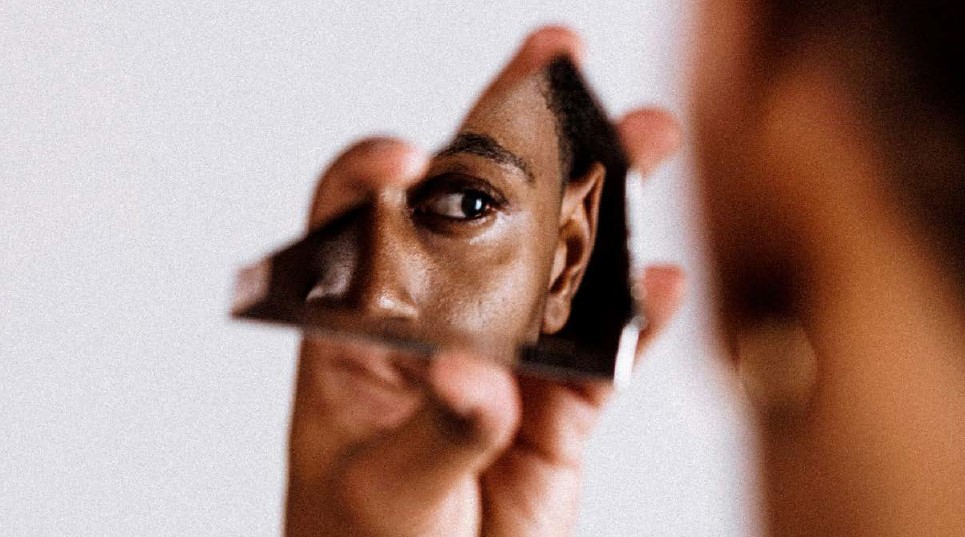
“I am a trainer and a writer.” That is how I have introduced myself for years. I work on gender discrimination, allyship, parenting and care. I write about the same subjects, but also out of a love for autobiography. And yet I ask myself: does that sentence really describe me? Does it say who I am or who I have learned to tell people I am?
It is from this question that a reflection on the role of men in combating male violence emerges: a public issue that I cannot separate from the way I look at myself. When I talk about male violence, the words seem clear to me: control, possession, oppression, patriarchy. I recognize the language that considers women property, the mechanisms that justify an assault, the narratives that disguise domination as love. But this very ability carries a risk: feeling protected from what I describe, occupying the reassuring position of the good man, who understands, denounces and distances himself. It is this distance that I want to question.
Condemning violence is necessary. However, it is not enough to explain each man's relationship with the privileges within which his masculinity has taken shape. Not committing violence does not mean being unrelated to the culture that can legitimize it, nor does it mean having stopped benefiting from the inequalities it reproduces. This does not equate everyday asymmetries with violence: condemning a behaviour does not automatically make me unrelated to the culture that produces it.
Among men who identify with feminist principles, I often see a temptation, one that concerns me too: turning awareness into an identity. We become deconstructed, sensitive, supportive men. We learn new words, talk about our vulnerabilities, almost as if showing ourselves to be vulnerable were enough to break away from traditional masculinity. But who remains at the centre? Who receives recognition for changing? Who determines how much we have changed?
Writing a political autobiography of masculinity means inhabiting this contradiction, especially as I write this article. I can confess to having privileges and turn that confession into another opportunity to talk about myself, display my awareness and implicitly ask to be considered different. I can do so even here, while criticizing male protagonism.
In Giving an Account of Oneself, Judith Butler challenges the idea that we are sovereign authors of our own stories. The self is never entirely transparent to itself: it is shaped by relationships, norms and languages that precede it and that it cannot fully recount. We are also what others have made possible, what we have internalized without choosing it. Giving an account of oneself means accepting that the story we tell about ourselves can be challenged. Even, and above all, by those who have experienced the consequences of our way of being men. Beyond asking myself what kind of man I have become, I feel it is necessary to ask under what conditions, which gestures I considered natural, and which sacrifices made by others supported opportunities that I believed were mine alone.
It took me time to understand that my autonomy did not always coincide with independence. Sometimes I felt self-sufficient because I was sufficiently supported to allow myself to believe it. Someone noticed needs I did not see, remembered deadlines I could forget, anticipated problems I would only encounter once they became urgent. I could have control over my time partly because someone else was using theirs to take care of things I was unaware of.
Joan Tronto calls this possibility of ignoring needs and obligations thanks to one's privileged position «privileged irresponsibility». Privilege also means being able to avoid responsibilities that others cannot afford to ignore. Within a family, this can also mean carrying out a task without having to identify, organize or monitor it. Once I recognize this asymmetry, what do I do with it? Do I describe it more accurately? Turn it into a well-written article? Or do I change the way I distribute my time, my decisions and my attention?
Butler also warns against the narcissism of bad conscience: my guilt, my struggle and my need to be forgiven once again take up all the space. I can admit that I was shaped by patriarchy, talk about my deconstruction and ask women to listen to my suffering, appreciate my progress and reassure me of my goodness. I remain the protagonist; the man remains at the centre. Even in these lines.
I am gradually developing the idea that allyship begins when I stop seeking relational confirmation of my moral identity. The value of solidarity is measured by the effects of my choices. That is where I must direct my attention. Less need to talk about how much I have changed, more willingness to make room for others and take on responsibilities that I previously left to them.
This is where care becomes the solution, but only if it is political. For Tronto, care is neither a benevolent feeling nor a feminine virtue. It means recognizing a need, taking responsibility for responding to it, acting competently and listening to the person receiving care. With caring-with, the question broadens and becomes: how can these responsibilities be distributed collectively? Who decides, who does the work, who pays the price in time and freedom, and who is listened to?
This is why it is not enough to ask men to be more considerate: we must rethink how families, companies and institutions distribute care responsibilities. Care alone does not prevent male violence. But training ourselves in conscious and competent care makes it possible to significantly reduce violence because it challenges the frantic virility of certain forms of masculinity. The task is urgent for men because we have often been educated to benefit from care rather than take responsibility for providing it. Practising care requires us to intervene in the grammar of relationships through everyday acts of relinquishment. An alliance that involves no relinquishment risks remaining nothing more than an opinion in favour of equality.
I have a small, almost trivial memory that stays with me and occasionally bursts into my thoughts, reprimanding the neat narrative I construct about myself. I went to buy schoolbooks for my daughter and son at a specialist neighbourhood bookshop. At the checkout, the bookseller slipped four little boxes into the bag: two watches and two pairs of earphones. «A gift!» she exclaimed. I looked around, puzzled, and told her I hadn't noticed any promotion. She laughed and explained that there was no promotion, that they were simply old stock, and that it was so lovely to see a father taking care of his children that she had decided to give them to me. I looked around, embarrassed. The queue of women behind me seemed endless. I mumbled a thank you and left the bookshop feeling confused.
An ordinary event had become extraordinary. And I had been rewarded for it. Rewarded for a form of care that I had not yet demonstrated I knew how to practise. Many people will frown, convinced that this is an exaggeration, but the image that haunts me is that of the mothers standing in line with a voucher familiar to anyone who lives here: the municipality's grant for the purchase of books for families in financial hardship. I don't have that voucher because I can comfortably afford that expense. There it is: those trivial gifts are a measure of so many injustices. I should have suggested giving them to those women. I should have politely declined. Instead, I went home, a trainer and a writer...
The initial question remains: how can I talk about my own masculinity without once again taking centre stage? Disappearing is not enough; silence is never neutral. Perhaps I must continue speaking in the first person, without claiming that my story is the definitive one, and accept that others may correct my self-portrait or, quite simply, fail to recognize themselves in it.
For a man, the personal becomes political when he stops telling his story as an example of emancipation from patriarchy and shares his privileges in order to change the conditions that have allowed him to benefit from them. And if one day I manage to do so, I will not be the only one entitled to tell that story.