
The value of diagnosis
In a country that is aging, with an increasingly elderly and fragile population, diagnostics cease to be a simple laboratory test and become a sort of sentinel of sustainability: the point where numbers, emotions, and the future of the healthcare system meet.
An aging country
Italy is one of the oldest countries in the world. The share of people over 65 exceeds 23–25% of the population, in some regions approaching 30%, and the demographic pyramid is now inverted: more elderly people, fewer young people, less workforce. At the same time, longevity is increasing, but often the quality of the added years is challenged by chronic diseases and comorbidities.
Heart, kidneys, lungs, metabolism, nervous system: it is no longer about a single disease, but the coexistence of two, three, sometimes four conditions in the same patient. Conversely, investment in healthcare spending has not always followed the evolution of needs with the same intensity. In the last thirty years, while the average life expectancy of Italians has increased by over 6 years—from 76 to 83.4 years—growth in public healthcare spending has been more limited, especially in real terms.
Between 1990 and 2016, per capita public healthcare spending increased significantly in nominal terms (+150%), but in real terms it was much more modest (about +34%). This indicates a growth dynamic less strong than the increase in healthcare demand linked to population aging.
In international comparison, Italy shows public healthcare spending of around 6.3% of GDP, slightly lower than the European average (about 6.9%) and the OECD average (about 7%). In other comparable European countries, over time, there has been greater continuity in healthcare investment, often more aligned with the evolution of healthcare demand. This scenario changes everything. Every hospitalization, every specialist visit, every additional check weighs more heavily on public finances and on families. Italian healthcare spending is already strongly oriented toward chronic diseases, which absorb over 70% of the budget, with a growing share involving hospitalizations, rehabilitation, and home care. In such a context, every error, every waste, every non-optimized pathway translates into lost lives and resources.
Diagnostics: the silent deuteragonist
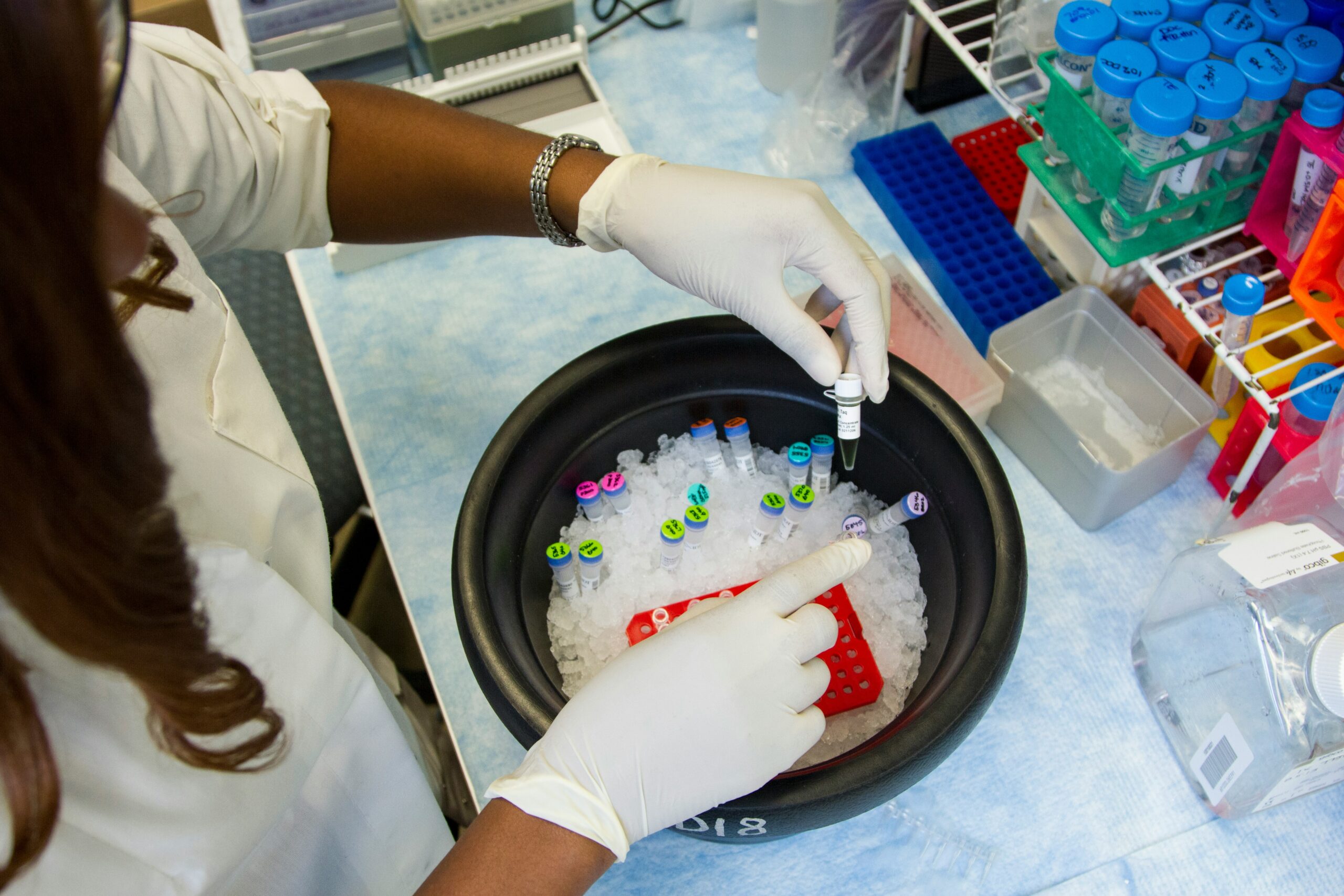
And this is precisely where diagnostics come into play. Laboratory medicine and in vitro diagnostics influence about 70% of clinical decisions, yet account for only 1–2% of healthcare spending. This ratio is a positive paradox: for every euro invested in accurate tests, reliable biomarkers, and timely analyses, mountains of resources are mobilized, therapeutic pathways are determined, and unnecessary hospitalizations are avoided.
Just think for a moment: a line on a graph, a value in a report, a signal in a blood test can be the difference between a patient returning home with a clear treatment plan and one ending up in the emergency room with an uncertain diagnosis and risk of complications. In an aging country, these small decisions multiply: every day, thousands of reports become gateways in or out of hospital care, hospital admissions, or further investigation.
Early diagnosis: numbers and lives
When it comes to early diagnosis, numbers immediately become deeply emotional. In oncology, the ability to detect a tumor at stage I–II instead of an advanced stage can increase five-year survival by 30–50 percentage points, depending on the type of cancer. For a patient, this is not a statistical figure: it is life time spent with loved ones, with the possibility of living with better quality, fewer aggressive treatments, fewer hospitalizations.
In screening programs for breast and colorectal cancer, early diagnosis reduces mortality by up to 30–50% compared to scenarios where the disease is detected only when symptoms appear. In cardiology, targeted management of risk factors—blood pressure, cholesterol, blood glucose, lifestyle—supported by screening and risk biomarkers, can reduce hospital admissions for heart attack and stroke and ease pressure on hospitals and emergency departments. According to the 2024 report of the Welfare Italia Forum, every euro invested in prevention can generate up to 14 euros of return along the country’s social and healthcare chain. This highlights the systemic potential of prevention, extending beyond direct healthcare savings.
Demography, comorbidity, and defensive medicine
In an aging country, economic sustainability inevitably depends on better risk management. In Italy, spending on low-value services—repeated tests, unnecessary checks, inappropriate treatments, specialist visits prescribed for safety rather than necessity—is estimated at 10–13 billion euros per year. An enormous figure, which in a demographically unfavorable context becomes unsustainable.
Here diagnostics play a crucial role. An accurate test, a well-planned analysis, a standardized pathway reduce the need to repeat exams, prevent inappropriate hospitalizations, and allow physicians to navigate with greater confidence in a sea of comorbidities. Defensive medicine—that which prescribes everything “just in case”—gives way to a more rational medicine, more data-driven, more respectful of patients and their real needs.
Diagnostics and big data: the medicine of the future
The diagnostics of the future are no longer just a line in a report, but a continuous conversation between patient and system. Millions of laboratory data points, analyses, images, and measurements are collected every day, and when properly used they become a source of knowledge, not just cost. The integration of big data, artificial intelligence, and advanced analytics makes it possible to anticipate complications, identify invisible patterns, and personalize care pathways in unprecedented ways.
In this scenario, diagnostics become a driver of predictive prevention. They do not wait for the patient to reach a crisis point but seek to recognize early signals, interpret trends, and reduce risk before it turns into overt disease. It is a shift in perspective: from “treating after disease” to “caring before disease,” with enormous benefits for quality of life and for the system itself.
Diagnostics are the link that holds together demography, economics, and humanity. They are the point where numbers stop being just numbers and become choices, pathways, decisions, lives. In an aging Italy, diagnostics are not a cost: they are an investment, an opportunity, a responsibility. An investment that, if done well, allows a country that is aging to care better, spend better, and live better.