
Humanitarian crises: bearing witness is an act of responsibility, because ignoring them is no longer an option
Who are UNHCR Special Friends and what do they do?
They are individuals from the economic, cultural, and academic worlds who choose to dedicate their time, voice, and credibility to supporting refugees, working alongside the UN Refugee Agency, which for 75 years has been mandated to protect people forced to flee war, violence, and persecution, ensuring the right to asylum, immediate humanitarian assistance, and durable solutions. We see ourselves as conscious allies who deepen their understanding of UNHCR’s work, meet people in crisis contexts, and help spread an informed narrative based on facts and international law, with the aim of promoting responsible engagement from the private sector in Italy. This is a particularly important role at a time when the number of people forced to flee has reached nearly 120 million worldwide, and the gap between humanitarian needs and available resources continues to widen.
Can you tell us about your mission in Uganda?
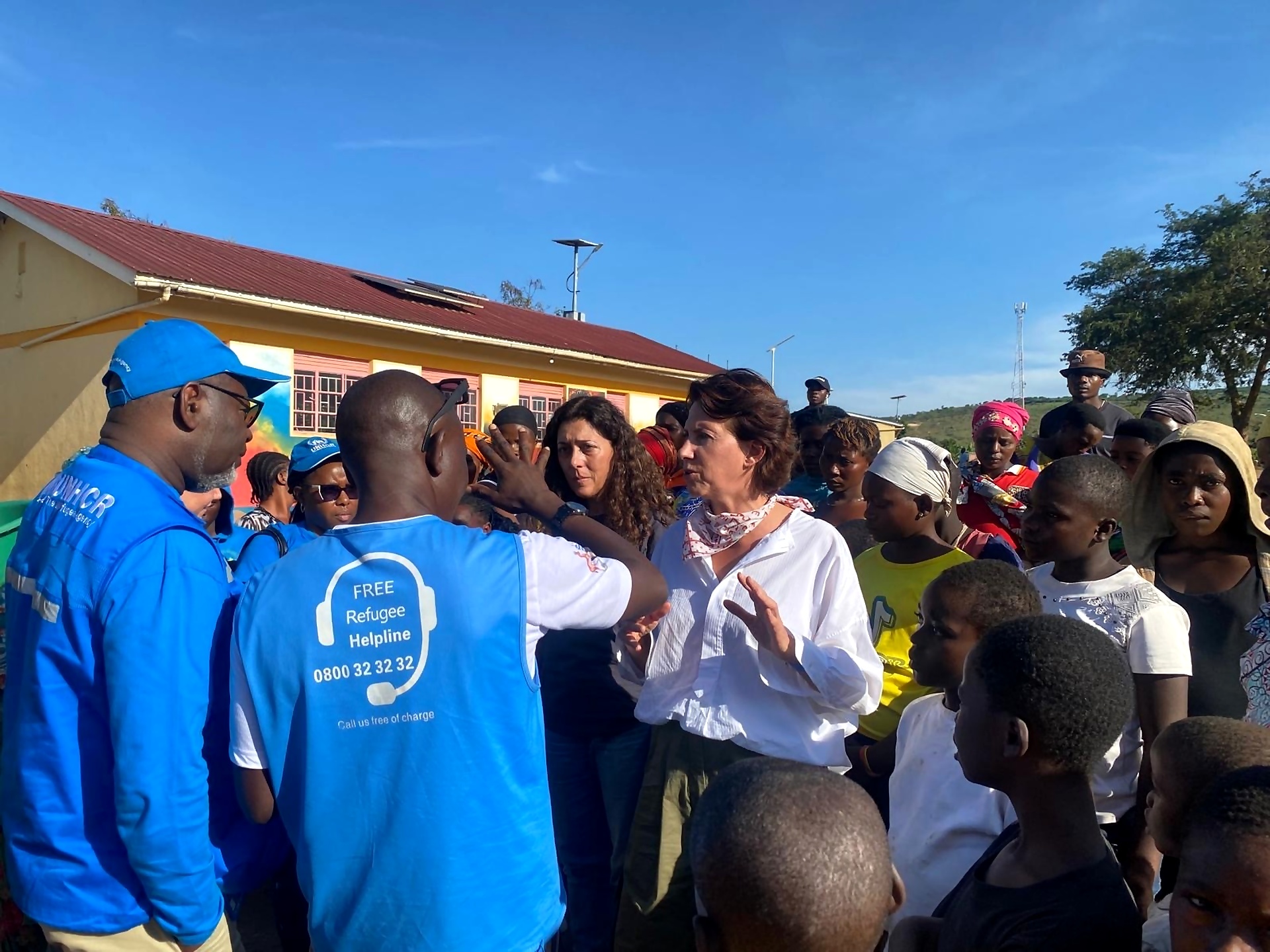
The mission in Uganda with UNHCR in November 2025 (my second with the UN Refugee Agency) stemmed from the desire to go beyond data, reports, and numbers, and to truly understand what it means to be a refugee today. In Africa, Uganda is the country hosting the largest number of refugees, nearly two million, thanks to one of the most progressive asylum policies in the world. Visiting settlements such as Nakivale, with 270,000 people, mostly fleeing from neighbouring Democratic Republic of the Congo, allowed me to come into contact with a reality made of extraordinary dignity, resilience, and hope, but also structural vulnerability. It was an intense mission: we listened to stories of forced escape from war and persecution, of surviving unimaginable hardship, while never losing hope for a better future. The emotions were strong: urgency, emotion, admiration, but also a deep awareness of the limits of humanitarian intervention if not supported by stable political and financial commitments. This experience reinforced a deep conviction in me: proximity changes perspective. And a more informed perspective has the power to generate better choices, also in the economic and financial world.
Were there people you met or stories you were told that changed the way you live, think, or assign importance to things once back in Italy?
Among the many people I met, there is one who struck me in a particularly profound way. A woman from the Democratic Republic of the Congo with a very difficult life story: a widow with a child with a disability, now living with her children in a tent shared with another mother. Ten people in total, with very few essential belongings. In that minimal space, I perceived a form of daily resilience that radically changes the way you measure everything else. In Uganda, women alone with children make up the majority; some manage to reinvent themselves: they produce soap, sell a few vegetables, improvise small businesses starting from nothing. Others, perhaps even more extraordinary, turn their experience into a resource for others: they teach sewing, farming, or basic accounting. And then there are the more fragile ones, more deeply affected. Yet even among them, surprisingly, there emerges an ability to smile, to say thank you to a country that, despite clear limitations, represents a fundamental possibility: being outside of war. These stories shift your centre of gravity; they change the weight you assign to problems, urgencies, and priorities. Not to minimise them, but to refocus on what truly matters: dignity, access, future. In this sense, UNHCR Italy’s work is crucial: through scholarships, programmes such as DAFI, and labour corridors, concrete tools are made available to transform reception from an emergency response into a real opportunity. Because without access to education and work, reception remains suspended; with these tools, however, it becomes a possibility for choice, autonomy, and rebuilding. What has stayed most deeply in my heart and mind is this: we cannot afford to look away, neither as individuals nor as a community. To look means to take responsibility. And, at this point, ignoring is no longer an option.
What is the situation regarding health, both physical and psycho-emotional, in the camps in Uganda?
From a healthcare perspective, the refugees I met live in a condition of fragile balance. Uganda integrates them into its national healthcare system, but enormous demographic pressure and cuts in international funding are making access to care increasingly difficult. The camps are located in remote areas, far from major urban centres; health facilities can only address basic needs, while every emergency can quickly turn into a tragedy due to lack of equipment, specialised staff, and distance from adequate hospitals. The main challenges include: child and maternal malnutrition, worsened by reduced food rations; infectious diseases such as malaria and respiratory infections; and insufficient access to mental health and psychosocial support, despite deep trauma linked to war, violence, and forced displacement.
Does the arrival of refugees worsen food insecurity and slow development in countries like Uganda? And what role have aid cuts, Covid, and current wars in West Asia played?
Uganda hosts one of the highest numbers of refugees in the world relative to its resources, but it is important to stress that refugees are not the primary cause of food insecurity or underdevelopment. The real drivers are a combination of structural and global factors: climate change, chronic poverty, regional instability, economic shocks, and, increasingly, geopolitical crises that directly affect global supply chains. In recent years, three elements have been particularly destabilising. First, cuts in humanitarian aid decided by the United States and other traditional donors, which have forced UNHCR to drastically reduce services for refugees and support to the Ugandan government in responding to the needs of the population it has generously hosted. In Uganda, this has led to a rapid increase in hunger, child malnutrition, and school dropouts, affecting both refugees and host communities. The long-term effects of the Covid-19 pandemic are still being felt, having eroded incomes, access to food, and basic services, especially for those in the informal economy, including many urban refugees. Finally, the current military escalation in West Asia, with the closure of the Strait of Hormuz, has further worsened conditions in countries such as Uganda. Disruptions or slowdowns in routes passing through Hormuz have immediate effects on the availability and cost of fertilisers, basic food commodities, and transport costs for fuel and humanitarian aid. This chain of effects from the Middle Eastern conflict is contributing to worsening food insecurity for over 45 million people globally, with particularly severe impacts in net food-importing countries such as Uganda and much of East Africa. In already fragile contexts, even small price increases or logistical delays can mean halved rations or suspended interventions. In other words, crises are now interconnected: what happens in the Strait of Hormuz directly affects refugee camps such as Nakivale.
Is the media coverage of crises in Uganda and Africa sufficient? And how can we contribute from here in such a globally unstable context?
No, media coverage remains largely insufficient. African crises, particularly protracted ones, continue to receive inconsistent and often marginal attention compared to their real scale. Recent studies show that international media attention is still strongly driven by perceived geopolitical relevance rather than by the scale of humanitarian need. The current war in West Asia is a clear example: attention is understandably focused on the military front, but the indirect consequences remain almost invisible, such as worsening food insecurity in countries far from the conflict, rising logistical costs that reduce humanitarian response capacity, and the diversion of financial and political resources away from “silent” crises such as those in sub-Saharan Africa. Telling these stories better means going beyond isolated facts: it means making connections visible, recognising that crises are not silos, and that human suffering does not follow media agendas. It means providing context, depth, and accountability in storytelling. For this reason, it is particularly valuable that those who have seen, who have experienced firsthand, choose to bear witness. Because testimony is not just memory: it is an act of responsibility towards what we know and towards the choices we are called to make.