
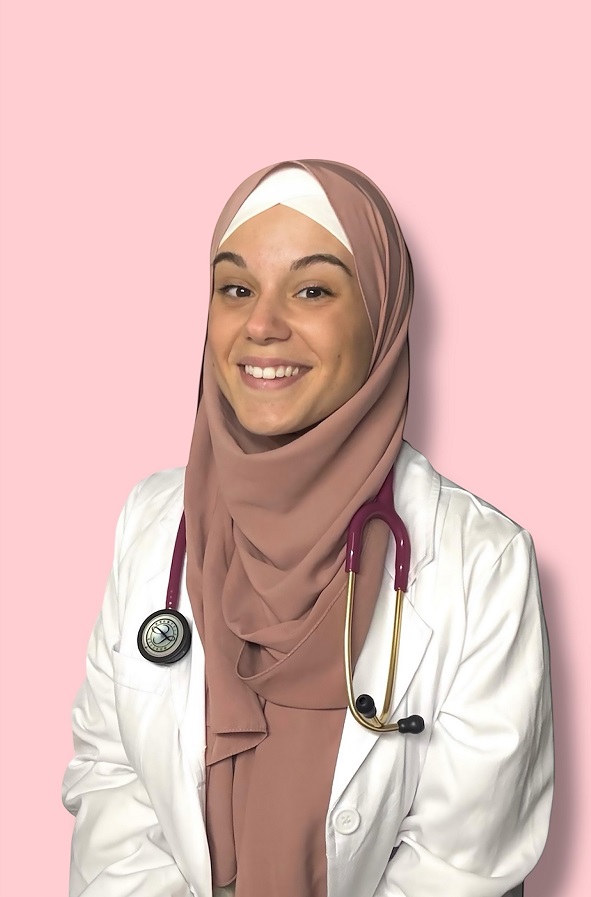
Between body and taboo: why women’s health is still difficult to talk about
In recent years, women’s health has increasingly become part of public conversation, yet many topics are still surrounded by silence and normalization. In your experience, what are the most deeply rooted taboos, and what impact do they have on women’s physical and mental well-being?
First of all, many of the most deeply rooted taboos concern everything related to sexuality, and especially female pleasure. For years, we have witnessed a strong normalization of pain, and because of this many women struggle to realize that experiencing pain is not normal. This applies to menstrual pain — probably the most normalized aspect of all — but also to pain during sexual intercourse. Added to this is the issue of pleasure. I see these difficulties across women from different cultural and religious backgrounds. There is still a great deal of difficulty in talking about these topics openly, even within couples. It almost seems as though a woman who wants to experience sexual pleasure is somehow considered inappropriate or immoral. Another area strongly marked by taboos is fertility. When a couple has been trying to conceive for a long time and it would be appropriate to begin medical investigations, resistance often emerges. Women tend to blame themselves immediately, speaking in terms of “fault” or “guilt,” and struggle to approach the situation as a shared issue. In reality, it would be essential to start talking about couple infertility, rather than framing it solely as a female or male issue.
An important part of your work involves education and combating misinformation. What are the most common fake news stories or misconceptions about women’s health that you encounter, and why is it so difficult to dismantle them?
Certainly, the biggest misconception concerns menstrual pain. It is a narrative that we women have been subjected to forever: the idea that it is normal to experience severe pain, to have to put one’s entire life on hold, to stay shut indoors. Another area heavily shaped by misinformation concerns the concept of virginity and hymenal integrity. Before doing this work, I thought it was an issue limited to certain cultures or religions, but in reality it also affects Western women far more than we imagine. I see it, for example, in the widespread fear of gynecological examinations, or of inserting a tampon or even a finger. These fears stem from poor knowledge of one’s own body and from an imaginary shaped by incorrect information. Then there is hormonophobia, the widespread fear of hormones. Often, when people talk about hormones, they automatically consider them harmful, but in reality the issue is much more complex: context, dosage, benefits, and even the consequences of not taking them must always be evaluated. Reducing everything to a generalized fear is misleading and risks distancing people from useful treatments. Underlying all this is a deeper difficulty: resistance to understanding the female body often comes from women themselves, because of the burden of shame we carry with us.
Talking about health also means building awareness and providing tools. Which strategies — educational, healthcare-related, and cultural — do you believe are most effective in promoting greater literacy around women’s health and enabling women to recognize and listen to their own bodies? And perhaps men as well…
From my point of view, social media are an extremely powerful tool in terms of information and public education. They can be used to spread content about women’s health, and they are already having a concrete impact: many women have found the courage to seek medical care or address certain issues precisely thanks to information encountered online. Naturally, though, this is not enough. Not everyone is reached in the same way, and these contents are often still not given the importance they deserve. I am a strong supporter of sex and emotional education in schools; I believe it is essential. It is easy to say that parents should take care of it, but what happens when parents themselves did not receive adequate education? This is why I believe it is crucial to introduce structured educational programs starting in middle school, especially considering that the age of first sexual experiences has decreased, and then continue through high school. Alongside schools, it is important to promote meetings and educational initiatives in other settings as well, preferably free of charge, because cost often becomes a barrier that excludes many people. I myself often participate in educational events on a voluntary basis for this reason. It is also essential to involve men. Women’s health cannot be considered an issue that concerns only women: fertility, pleasure, and pain are matters that involve all genders. As long as only one part of the population is educated, the awareness gap will never truly be closed. Finally, I believe the starting point must also be the family. I would very much like to work on sexual education programs aimed at parents, because there is often interest and awareness of the importance of these issues, but many lack the tools — and in many cases the confidence — to address them with their children without misinformation or embarrassment.
You are Muslim and also work within Islamic communities, focusing on education and women’s health. How does this specific context influence your approach? What needs or forms of resistance emerge most often when addressing these issues?
Becoming part of the Islamic community, and particularly being in contact with Arab communities, confronted me with a huge challenge: the need to take cultural and religious context into account. At first it was difficult, because I came from the idea that medicine is universal and that background should not matter. But I realized that with that approach, no progress is made — in fact, it can generate resistance. Taking contexts into consideration, on the other hand, works. Of course, this does not mean believing that deeply rooted beliefs passed down through generations can be changed in a single meeting. The needs and the resistances I encounter often overlap. In mosques, I frequently see very high participation from women in the meetings I organize, because they need validation for something they already partly know: that it is normal and right to experience pleasure in sexual relationships, that female identity cannot be reduced to the integrity of a small membrane of skin, and that suffering is not acceptable. There is a need to hear this from a professional, and even more so from a Muslim professional. At the same time, when women acquire awareness and tools, fear of judgment often emerges when it comes to putting them into practice. In many Islamic and Arab communities, social judgment is very strong and can even lead to isolation. There is also great respect for parents’ words, which are often perceived almost as law, and this strongly influences phenomena such as pain during intercourse. In my experience, I see many women with vaginismus who seek help after years of marriage without sexual intercourse, in contexts where pain has been normalized even by female family members, such as mothers-in-law. Often they choose to address the issue with their husbands, but not with the female side of the family, precisely because of the fear of judgment. In this work, it is not enough simply to explain what medicine says; it is also necessary to integrate what is recognized within Islam, because this makes the information more credible and acceptable. When the message comes from a Muslim professional, it is received differently. This aspect becomes even more important considering that, in some cases, there is also distrust toward non-Muslim healthcare professionals, often linked to negative experiences caused by prejudice against Muslim people that can also be found within medical and healthcare settings.